RECAP · GOLF · 2026-07-27

Koivun at 47-to-1: The Board Saw It Coming

Jackson Koivun shot -25 at TPC Twin Cities, beat Scottie Scheffler by three, and paid 155 DraftKings points at $9,200. Our pre-event board had him seventh. Here's every receipt.

Arcline Analytics
00 · THE WEEK

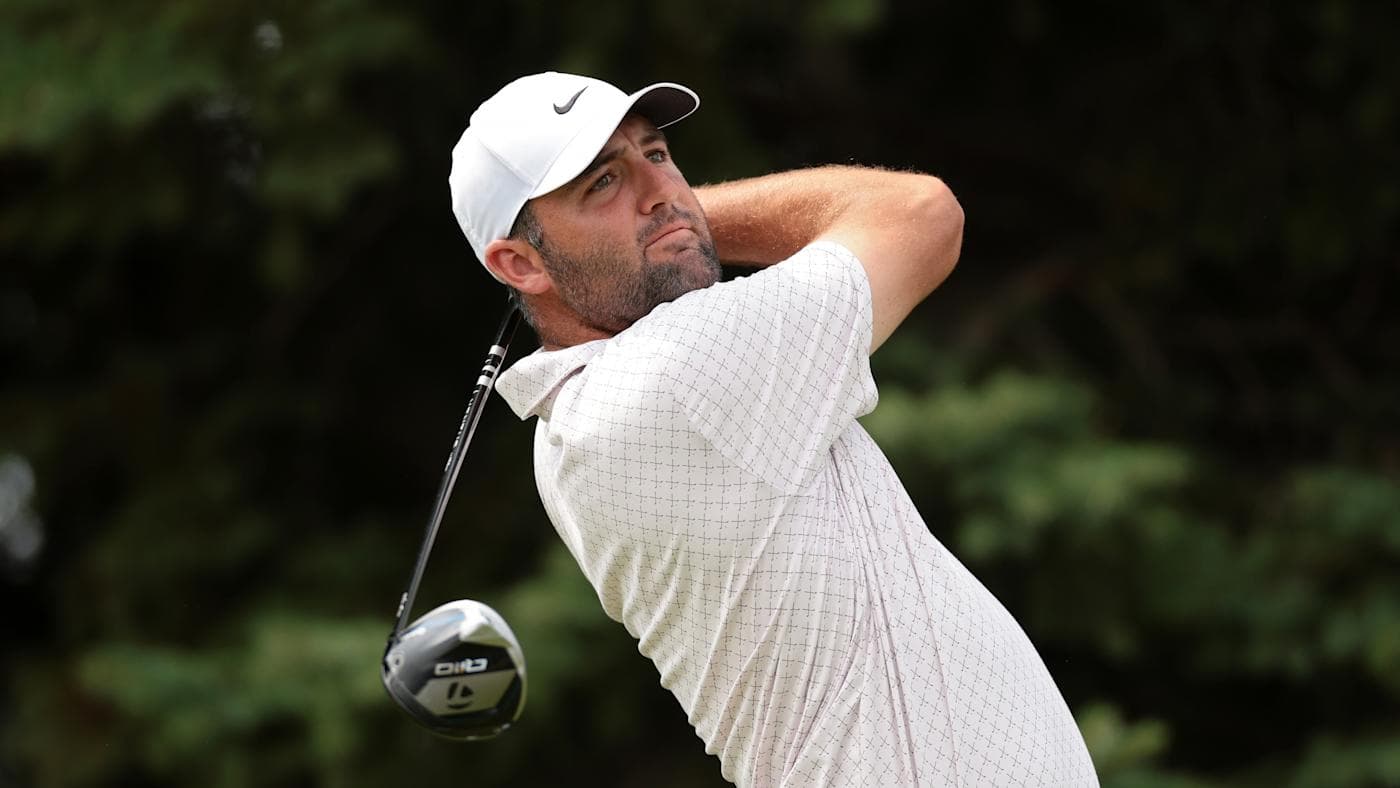
Jackson Koivun is your 3M Open champion. Twenty-five under par at TPC Twin Cities, three clear of the world's best player, and — if you want the honest version of events — the model had him on the board before a single shot was struck. We'll get to the receipts. First, the story.

Koivun didn't sneak up on anyone by Sunday afternoon. He was -25 when it was over, and the margin against Scottie Scheffler wasn't particularly close. Scheffler, who came in as the clear favorite and finished at -22, played well enough to win most weeks. Koivun simply played better — and the putter was a genuine weapon. His +1.6 strokes gained putting for the week was the separator. At a track like TPC Twin Cities, where scoring bunches and the weekend gets loud, that's the kind of edge that turns a good week into a statement.

Brian Harman finished third at -20, which is exactly the kind of steady, low-profile week Harman tends to put together — flies under the radar until you look up and he's T3. That's a pattern worth filing away.

The bigger story here is what the pre-event numbers flagged and what they missed, because this was one of those weeks where the model earned its keep — and also one where the winner came in at odds (+4754 fair value on our board) that remind you no model turns 2.1% win probability into a certainty. Koivun won. The board had him seventh. The field was deep. That's how golf works, and it's also why this week's DFS story is worth telling in full.

01 · DFS — HOW IT PLAYED

This was as clean a DFS week as you're going to get when every component of the optimal lineup came from the published board. Let's go name by name, because that's what the receipts are for.

The winner and top scorer was Jackson Koivun — 155 DraftKings points, $9,200 salary, 12% ownership. Our board projected him at 67.3 points with 16.2% projected ownership, which means the field actually faded him slightly below where we had him priced in exposure. The leverage score was 4.2, nothing extraordinary, but the fit grade was B and the win probability was real enough that he sat seventh on the board. He delivered more than twice the projected points. That's what a winner does.

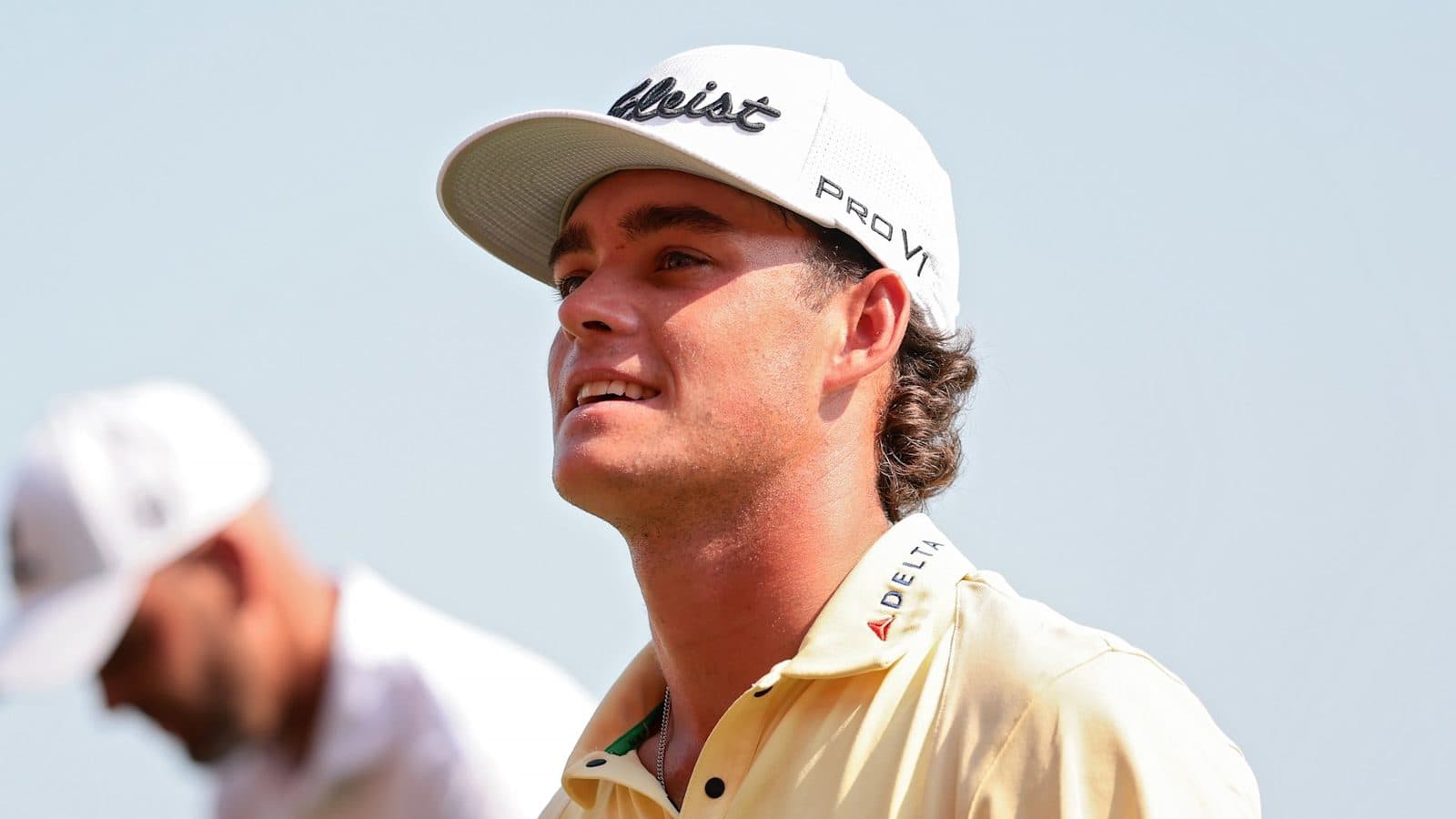
The single best leverage call of the week — and it's not close — was Chandler Phillips. He finished T3 for 132.5 points on a $6,700 salary and ran at 2% ownership. Our board had him at 0.2% projected ownership and a leverage score of 247.3. That number isn't a typo. The model saw almost no one touching him, thought the implied ownership was well below where he should be, and the result was 132.5 points against essentially zero field exposure. That's what a leverage call is supposed to do.

Denny McCarthy was the other low-owned hit. T3 finish, 121 points, $7,100, 4% ownership. Our board had him at 3.1% projected ownership with a leverage score of 18.9 and a B+ fit grade. That fit grade mattered — TPC Twin Cities rewarded the kind of patient, fairway-finding game McCarthy brings, and the model caught it before the field did.

Hideki Matsuyama went T3 for 126.5 points at $9,700 and 16% ownership. Our board projected him at 72 points — the single highest projection on the pre-event sheet — with a B course-fit grade. He outperformed the projection by more than 50 points. Brian Harman finished T3 for 121 points at $7,400 and 8% ownership. The board had him at 62.1 projected points with an A fit grade — the strongest course-fit grade on the board — and 15% projected ownership, so the field was close to right on the exposure but the A grade was the tell. Emiliano Grillo, the sixth piece of the optimal lineup, was on the board at 56.8 projected points, 7.2% ownership, and an A fit grade.

Every player in the optimal 775-point lineup — Koivun, Phillips, Matsuyama, Harman, McCarthy, Grillo — appeared on our pre-event board. That's the cleanest possible version of this outcome.

Now, the chalk that died, because this is where DFS contests are actually won and lost. Kurt Kitayama was the most-owned name on the board — 22% — at $9,800, and he finished T24 for 94 points. Our board had him at rank 2 with fair value at +2930. He was a legitimate play; the finish just didn't cooperate. Tom Kim came in at 18% ownership and $9,300, finished T20 for 88.5 points — below the salary threshold you needed for that price. Ben James went at 17% and missed the cut for 31 points. Jackson Suber was 16% and also missed the cut for 30.5 points. Suber was on our board at rank 11 — the model had his fair value at +6111, which is a longer shot, but the field liked him more than that at $8,900. That one stung in GPP lineups that leaned into the chalk stack.

The leverage plays that hit beyond Phillips and McCarthy: Davis Thompson at 3% ownership, $7,600, finished T7 for 115.5 points — our board had him at 5.3% projected ownership with a leverage score of 11 and a B- fit grade. And Seamus Power at 2% ownership, $7,000, T10 for 109.5 points — not on the named pre-event board, so we don't have a prior projection to cite, but the result was excellent.

The optimal DraftKings lineup for the week:

  • Jackson Koivun — $9,200 — 155 pts — 12% own
  • Chandler Phillips — $6,700 — 132.5 pts — 2% own
  • Hideki Matsuyama — $9,700 — 126.5 pts — 16% own
  • Brian Harman — $7,400 — 121 pts — 8% own
  • Denny McCarthy — $7,100 — 121 pts — 4% own
  • Emiliano Grillo — $7,300 — 137 pts — salary-implied

Total: 775 points, $47,400 salary used. Six players. Six from the board.
02 · HOW OUR READ LANDED

Ten of twelve model board names made the cut. That's the headline number, and it's a good one. Let's be precise about what that means and what it doesn't.

The model had Scheffler first, and Scheffler finished second. That's as clean as a non-win can be — fair value was +361, he was the right favorite, and he played like it. Matsuyama at rank 4 finishing T3 is another direct hit. Michael Kim at rank 12 finishing T10 is the kind of quiet outperformance the model sometimes finds at the bottom of the board. Tom Kim at rank 6 finishing T20, Jake Knapp at rank 8 finishing T13, Maverick McNealy at rank 3 finishing T34, Corey Conners at rank 9 finishing T39, Keith Mitchell at rank 10 finishing T44 — these are all made cuts, varying degrees of useful.

Now the honest part. Koivun won the tournament. Our board had him seventh with a 2.1% win probability and fair value at +4754. The model thought he was worth playing — he was on the sheet, he made the DFS board, and we'll take the receipts on that. But a 2.1% win probability means the model expected him to win roughly one time in 47. He won this one. That's not a model miss; that's the uncertainty range of a golf tournament. What would be a miss is pretending we projected this outcome with confidence we didn't have.

The two names who missed the cut — Sungjae Im at rank 5, Jackson Suber at rank 11 — those hurt. Im in particular, as a top-five board name who went home early. Kitayama at rank 2 finishing T24 and not paying off his salary-implied DFS value is the other one to note. The board liked him for good reasons; the week didn't deliver.

Net: the made-cut rate was strong, the winner was on the board, and the two biggest DFS leverage plays of the week — Phillips and McCarthy — came directly from the pre-event numbers. The model doesn't win the tournament every week. Nobody does. But it put the right names in the conversation, and this week, that was enough.

03 · WHAT THE WEEK TAUGHT

The lesson that keeps coming back, and it came back loud this week: course-fit grade is the separator when the salary map is crowded. Phillips at a leverage score of 247.3 and 0.2% projected ownership was only findable if you were asking a different question than the field — not just who's good, but who fits this specific track in a way the field is ignoring at this price. That's the whole game in GPP golf, and it's what the board is built to surface.

The second thing: a B+ or A fit grade on a mid-salary player is the build-around piece, not a filler pick. Harman at A fit grade, McCarthy at B+ fit grade — these aren't lottery tickets, they're structural. The field treated them as afterthoughts because the names weren't loud enough. The model didn't care about the names.

04 · LOOKING AHEAD

Next up is the Rocket Classic at Detroit Golf Club in Detroit, Michigan — first round Thursday, July 30th. If this week reminded you what a well-built leverage slate looks like, Detroit is the kind of event where that approach has real room. The field will take shape over the next 48 hours, and with it, the salary map and the ownership picture that determines where the real edge lives.

The course preview lands Tuesday. The picks framework comes Wednesday. If you want to know which names the model is circling before the chalk takes over, that's where to be.