Scheffler at 45% and a Course That Rewards Putters
TPC Twin Cities is going to eat chalk alive if Scheffler stumbles. Here's how to build around the world number one without being destroyed by him — and where the real GPP money is hiding in Minnesota.
By Arcline Analytics13 min read
OVERVIEW
The 3M Open at TPC Twin Cities is one of those weeks where the DFS puzzle is genuinely interesting — not because the course is exotic or the field is stacked with drama, but because the ownership map is so concentrated at the top that getting the chalk right, or fading it smartly, is essentially the whole game.
Par 71, parkland, a field averaging 69.5 on the scorecard. This is a birdie-fest on paper, which means you need volume, and the players who deliver volume here do it with the putter and on approach. The model weights putting at 0.9 — the highest of any skill category on this course profile — with approach right behind it at 0.8. Off the tee matters, but less than you'd expect from a tight-tree parkland. Around the green gets a 0.7 weighting. The short game and the flat stick are what separate the leaderboard from the also-rans.
Field size is 139. That's a relatively contained headcount, which means the path to a top finish is a little cleaner, but it also means the ownership percentages hit harder. When nearly half the field is on one guy, the game theory gets real in a hurry.
WHAT MATTERS HERE
Let's keep this simple, because the course profile actually makes it simple: if you can't putt at TPC Twin Cities, you're surviving the week, not winning it. The 0.9 putting weight isn't window dressing — it's the model telling you that strokes gained on the green separates the tiers here more than anything else.
Approach play is the second engine. The greens at TPC Twin Cities aren't so small or punishing that proximity is everything, but consistent ball-striking into the par fours — and there are 11 of them, so there's no hiding — will dictate scoring opportunities. You need a guy who can be aggressive off the tee on the three par fives and then execute from 150 in on the long stretch of par fours.
The around-the-green number (0.7) is interesting because it's elevated enough to tell you that scrambling matters, but not so high that you should be specifically hunting short-game specialists. Think of it as a tiebreaker: everything else being equal, the guy with the better short game gets the nod.
Target scoring is a 69.5 field average, which means the course plays just over a stroke under par per round. To cash in DFS, you're building toward a lineup that gets you to that 391-point neighborhood. To contend for a top-10 finish, you need guys who can push into the 480-range territory. The winner is going to be somewhere around 547. Budget your build accordingly.
THE OWNERSHIP LANDSCAPE
Here's the honest truth about this week's ownership map: it's top-heavy in a way that requires a real decision, not just lineup construction.
The chalk — projected ownership (model)
Player
Salary
Proj
Own
Lev
Fit
Scottie Scheffler
$14.9K
109.8
45.3%
1.9x
B
Maverick McNealy
$9.9K
72.8
21.5%
2.1x
B
Kurt Kitayama
$9.8K
72.2
20.7%
2x
B
Hideki Matsuyama
$9.7K
72.0
19.8%
2.2x
B
Tom Kim
$9.3K
70.5
19.1%
2x
B+
Keith Mitchell
$9.5K
68.1
16.6%
2.3x
B
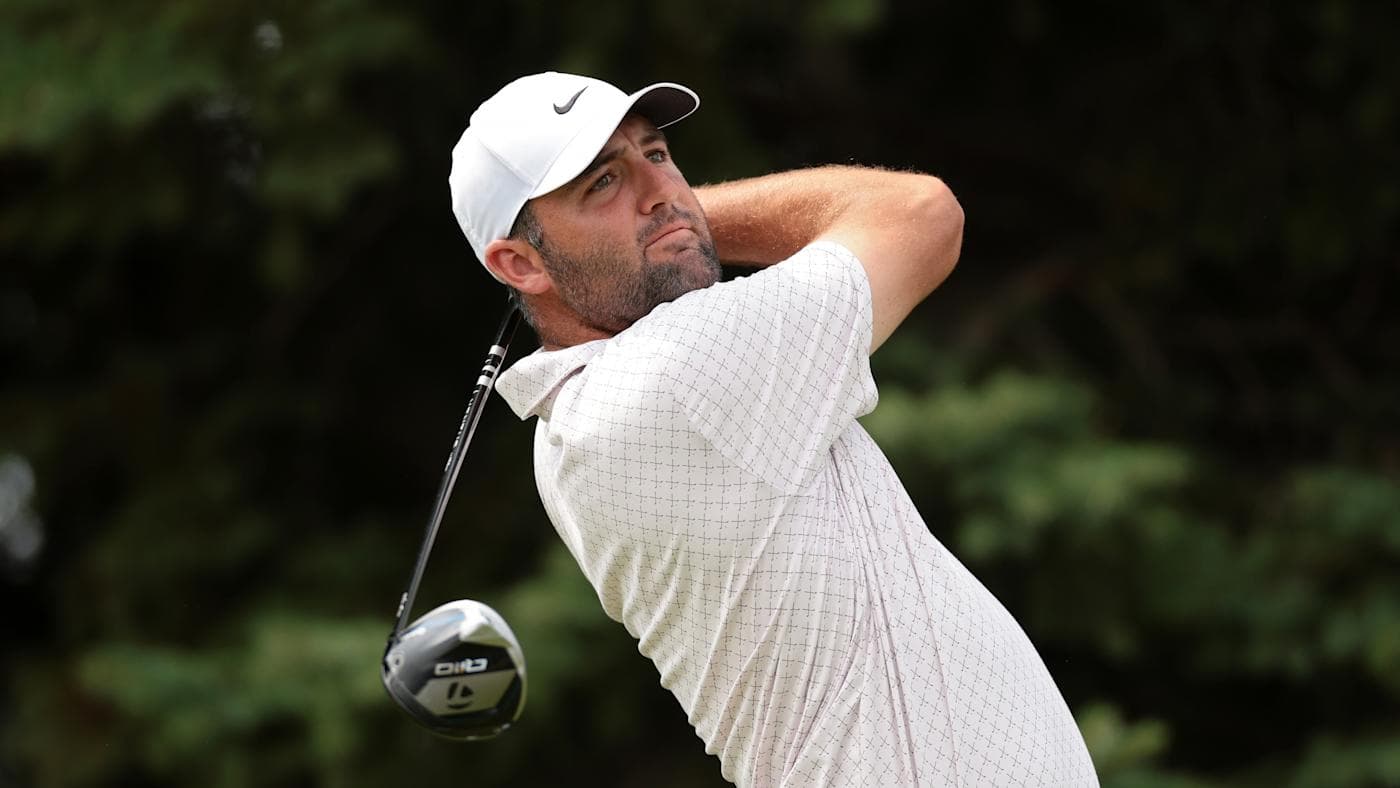
Scottie Scheffler at 45.3% ownership is the number that defines this week. Nearly half of all GPP lineups will have him. His leverage score of 1.9 reflects that — you're not getting differentiated by rostering him, you're just keeping pace with the field. And at $14,900, he's eating a massive chunk of salary that either pays off spectacularly (his ceiling is 137.5, which would torch any lineup he's absent from) or becomes an anvil around your neck if he plays like a mortal.
The middle tier — Maverick McNealy, Kurt Kitayama, Hideki Matsuyama, Tom Kim, and Keith Mitchell — all run between 16 and 22% ownership. They're chalk, but manageable chalk. The leverage scores in this tier hover around 2.0–2.3, which means you can own them without feeling like you've surrendered differentiation. The issue is building a cohesive lineup around Scheffler AND one or two of these names while still affording upside elsewhere. The math gets tight.
The real ownership story this week: the gap between 45% (Scheffler) and the next guy (McNealy at 21.5%) is enormous. Scheffler is in a tier by himself. That means fading him is a distinct strategy, not just a salary-saving move. If he finishes outside the top five, Scheffler-free lineups are going to run the tables.
CASH PLAYS
Cash game construction this week is straightforward in concept, messier in execution. You want a high floor, you want the highest probability of making cuts and posting consistent scores, and you want a salary structure that doesn't force you into a dart throw at the bottom.
Top projected — cash core (model)
Player
Salary
Proj
Own
Lev
Fit
Scottie Scheffler
$14.9K
109.8
45.3%
1.9x
B
Maverick McNealy
$9.9K
72.8
21.5%
2.1x
B
Kurt Kitayama
$9.8K
72.2
20.7%
2x
B
Hideki Matsuyama
$9.7K
72.0
19.8%
2.2x
B
Tom Kim
$9.3K
70.5
19.1%
2x
B+
Keith Mitchell
$9.5K
68.1
16.6%
2.3x
B
The top of the projected board is honest: Scheffler projects at 109.8 with a cut score of 94. In cash, his floor is the story more than his ceiling. He's viable — the question is whether you can build around him at $14,900.
Corey Conners at $8,700 is one of the more interesting cash anchors in the mid-salary tier. His B+ course fit and a 2.4 leverage score at ownership under 15% makes him a palatable cash play — you're getting real production at a salary that gives you flexibility. His cut score of 73 gives him a reasonable floor.
Doug Ghim is the name that jumps off the page for cash. A-grade course fit, $9,000 salary, 15.3% ownership. The A fit from the model isn't an accident — Ghim's game profile aligns well with a putting-weighted, approach-heavy track. At $9,000 you're paying a fair price for a legitimate course fit. His cut number of 73 suggests the model sees him making the weekend with regularity here. In double-up and 50/50 formats, that kind of floor matters enormously.
Tom Kim at $9,300 with a B+ fit and the strongest ceiling-to-salary ratio in the mid-tier makes him a sensible cash anchor. His 70.5 projection at 19.1% ownership puts him in the manageable chalk zone — owned enough that you're not getting hurt if he goes off, not so owned that you're losing on the correlation problem.
GPP & LEVERAGE
This is where the week gets fun. The leverage tier is legitimately interesting at TPC Twin Cities because the guys with the highest multipliers have enough course fit to make the risk feel calculated rather than reckless.
Highest leverage (model)
Player
Salary
Proj
Own
Lev
Fit
Max McGreevy
$7.1K
61.0
4.4%
5.8x
B+
Michael Kim
$7.2K
60.6
4.8%
5.3x
B
Casey Jarvis
$7.3K
60.7
6.2%
3.9x
B
Ben Kohles
$7.3K
62.5
7.4%
3.5x
A
Brian Harman
$7.4K
62.1
8.1%
3.4x
A
Christiaan Bezuidenhout
$7.9K
63.6
10.1%
2.9x
B+
Michael Brennan
$7.8K
60.6
8.9%
2.9x
C
Mac Meissner
$8.1K
66.0
11.8%
2.7x
B
Max McGreevy leads the field in leverage at 5.8 with only 4.4% projected ownership. At $7,100 with a B+ fit and a ceiling of 98.5, he's the kind of name you can sprinkle into a handful of GPP lineups without it feeling like a desperation play. His cut number of 67 tells you the model thinks he's a real threat to be around on the weekend — and at his ownership, if he shows up in a meaningful way, you're going to look like a genius.
Michael Kim at 5.3 leverage and 4.8% ownership is the other true low-exposure gem in this tier. $7,200 salary, 99.5 ceiling, cut at 66. The ceiling is actually the best in the leverage tier. This is the guy you're building around in your most differentiated GPP constructs.
Ben Kohles deserves a longer look than his 7.4% ownership suggests. He's got an A course fit — the best in the high-leverage group — a 3.5 leverage score, and a 99.5 ceiling. That A fit on a putting-heavy track is meaningful. Kohles is the bridge between the leverage tier and the best-fit value tier, and he might be the single most interesting name on the board this week.
Brian Harman, similarly, gets an A course fit at $7,400 with 8.1% ownership. Two-time winner vibes aside, the model just likes his game for this track — and the ownership is light enough that a weekend run from him would do serious damage to your GPP competitors.
Christiaan Bezuidenhout at $7,900 and 10.1% ownership sits at the top of the leverage tier by salary, with a 100-point ceiling and a B+ fit. He's the leveraged mid-tier anchor — not a dart throw, not chalk. The kind of name you feel okay about in three or four lineups.
THE PUNT-LEVERAGE TIER
Down at the bottom of the salary range, the model has identified a handful of names with A-grade course fits at prices that would make your accountant smile. These are your GPP differentiators — the guys you use to free up salary for a Scheffler or a McNealy while still rostering a name that actually fits the course profile.
Best course-fit value (model)
Player
Salary
Proj
Own
Lev
Fit
Ben Kohles
$7.3K
62.5
7.4%
3.5x
A
Brian Harman
$7.4K
62.1
8.1%
3.4x
A
Andrew Putnam
$7.0K
59.2
3.1%
7.2x
A
Zac Blair
$6.9K
58.0
2.5%
8x
A
Emiliano Grillo
$7.3K
56.8
5.6%
3.6x
A
Lee Hodges
$7.2K
56.5
4%
4.8x
A
Takumi Kanaya
$6.7K
54.3
1.3%
12.5x
A
Matt Kuchar
$7.0K
54.2
2.1%
7.2x
A
Andrew Putnam is the most striking name on this list: $7,000, A course fit, 3.1% ownership, and a leverage score of 7.2. His ceiling of 96.5 is real. This is the kind of play that wins GPPs if it hits — because almost nobody is on him, and his game aligns with what TPC Twin Cities actually rewards. Cut score of 65 is the only thing giving you pause, but in a field-average environment of 69.5, the floor risk is shared across the whole board.
Zac Blair at $6,900 with an A fit and only 2.5% ownership is about as differentiated as you can get while still trusting the model. Leverage of 8.0 is second on the entire board. You're not putting him in every lineup, but in your one or two most aggressive GPP builds? He's worth a slot.
Takumi Kanaya is the most extreme punt on the board: $6,700, A fit, 1.3% ownership, 12.5 leverage. That leverage number is staggering. The projection is conservative and the cut number of 58 reflects real risk, but this is the name that wins a major GPP if everything breaks right. One lineup, maybe two. Eyes open.
Lee Hodges and Emiliano Grillo round out the A-fit value tier at $7,200 and $7,300 respectively. Hodges carries a 4.8 leverage score at only 4.0% ownership. Grillo at 5.6% ownership with a 3.6 leverage score is slightly more exposed but still a genuine value. Both fit the course. Both offer meaningful ceiling for the price.
The thread connecting all of these names: A-grade course fit on a putting-weighted track. The model isn't just looking at price — it's telling you these guys' games actually match what this course asks for. That's the best kind of punt.
TARGET SCORES
Knowing where the bars are set changes how you build. Here's what the model projects for meaningful thresholds at TPC Twin Cities this week.
Target scores — 6-golfer DK roster
Cash line
391
Top 10%
480
Top 1%
547
Perfect lineup
697
The cash line sits at 391 points. That's your floor — build to clear it, and in double-up and 50/50 formats, that's where you're focused. Top-10 DFS territory is 480, which requires a lineup where your studs actually produce and your values don't completely disappear on you. The tournament winner will likely need to push toward 547, and the theoretically optimal lineup clears 697 — that's the ceiling of the field if everything breaks perfectly.
The gap between cash (391) and optimal (697) is the widest you'll ever see, which is a reminder that in any given week, the winner of a large-field GPP gets there through a combination of construction skill and variance. Build to cash consistently; build to win by taking calculated swings on the leverage plays.
THE BETTING CARD
No edge cleared the bar this week.
That's not a hedge and it's not a cop-out — it's the honest read from the model. The outright market and the top-20 placement market didn't surface a play where the probability gap between our number and the book's number was wide enough to justify a recommendation. In a field where Scheffler is this heavily priced and the rest of the market is efficiently set around the chalk cluster, that's not a shocking outcome.
We'll tell you when there's an edge worth talking about. This week, the model is saying the interesting action is in DFS, not the sportsbook. That's a real answer, not a dodge — and frankly, the weeks when we say nothing are the ones that should make you trust us when we do say something.
THE BOTTOM LINE
Here's the week in one paragraph: TPC Twin Cities rewards putters and approach players on a birdie-heavy par-71 layout. The model likes A-grade course fits — Kohles, Harman, Ghim, Putnam, Blair, Kanaya, Hodges, Grillo — and the putting weight on this course makes their fits genuinely meaningful, not just aesthetic.
The ownership story is Scheffler at 45.3%. He's a real player to have in cash; he's a decision in GPP. If you're going big-field tournaments, you need to think hard about whether you're building with him or against him — because the field is going to do one of those things, and your edge comes from being on the right side of that split if he finishes outside the top handful.
The best GPP build this week runs through the A-fit value tier: one or two plays from the Putnam/Blair/Kanaya range, a leveraged mid-tier anchor like McGreevy or Michael Kim, a B+ course fit from the leverage tier like Conners or Bezuidenhout, and then a decision at the top of the salary on whether Scheffler at 45% is a risk you're willing to share with half the field.
No betting edges this week. Save the bankroll, play the DFS, and let's see what Minnesota looks like come Sunday afternoon.
This story reflects the information and prices available at the publication time shown above.