PICKS FRAMEWORK · GOLF · Jul 29

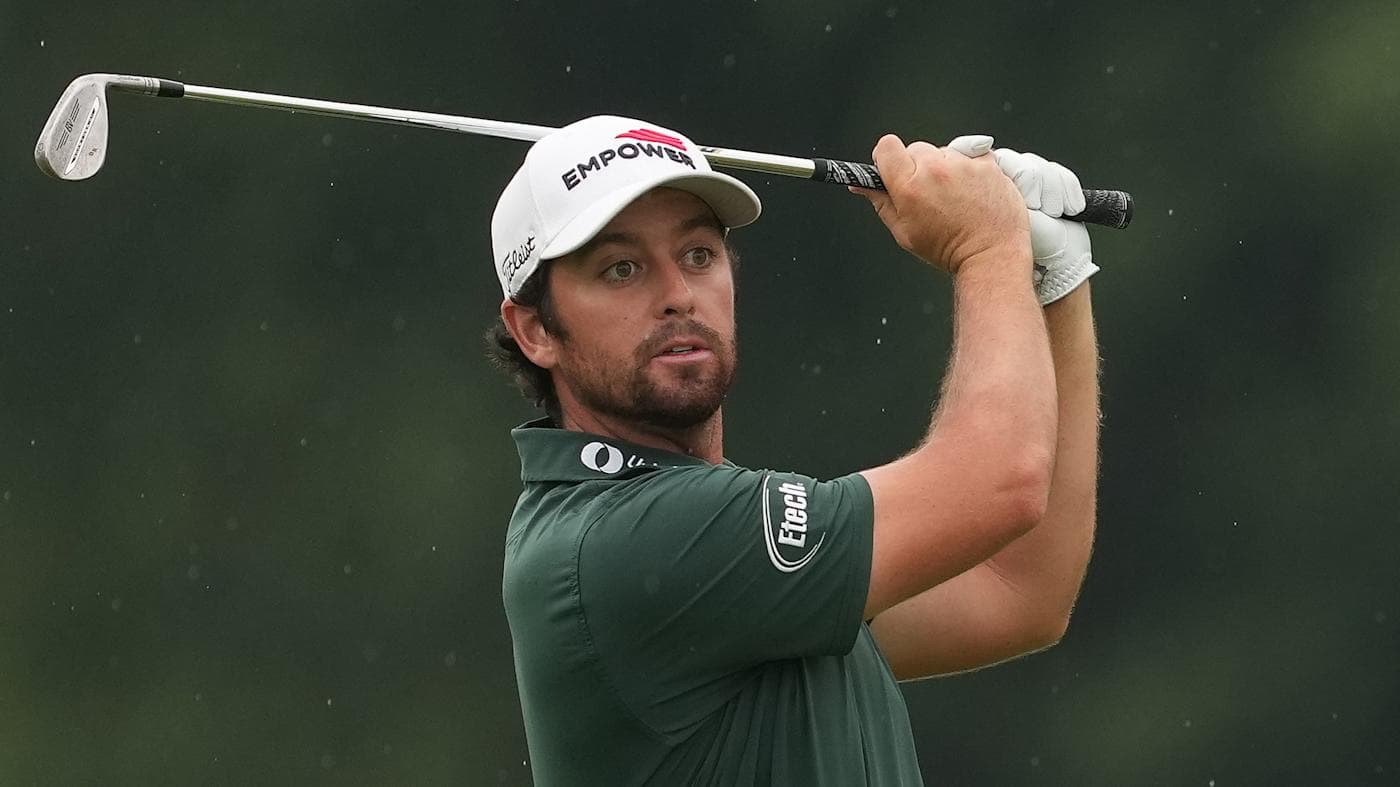
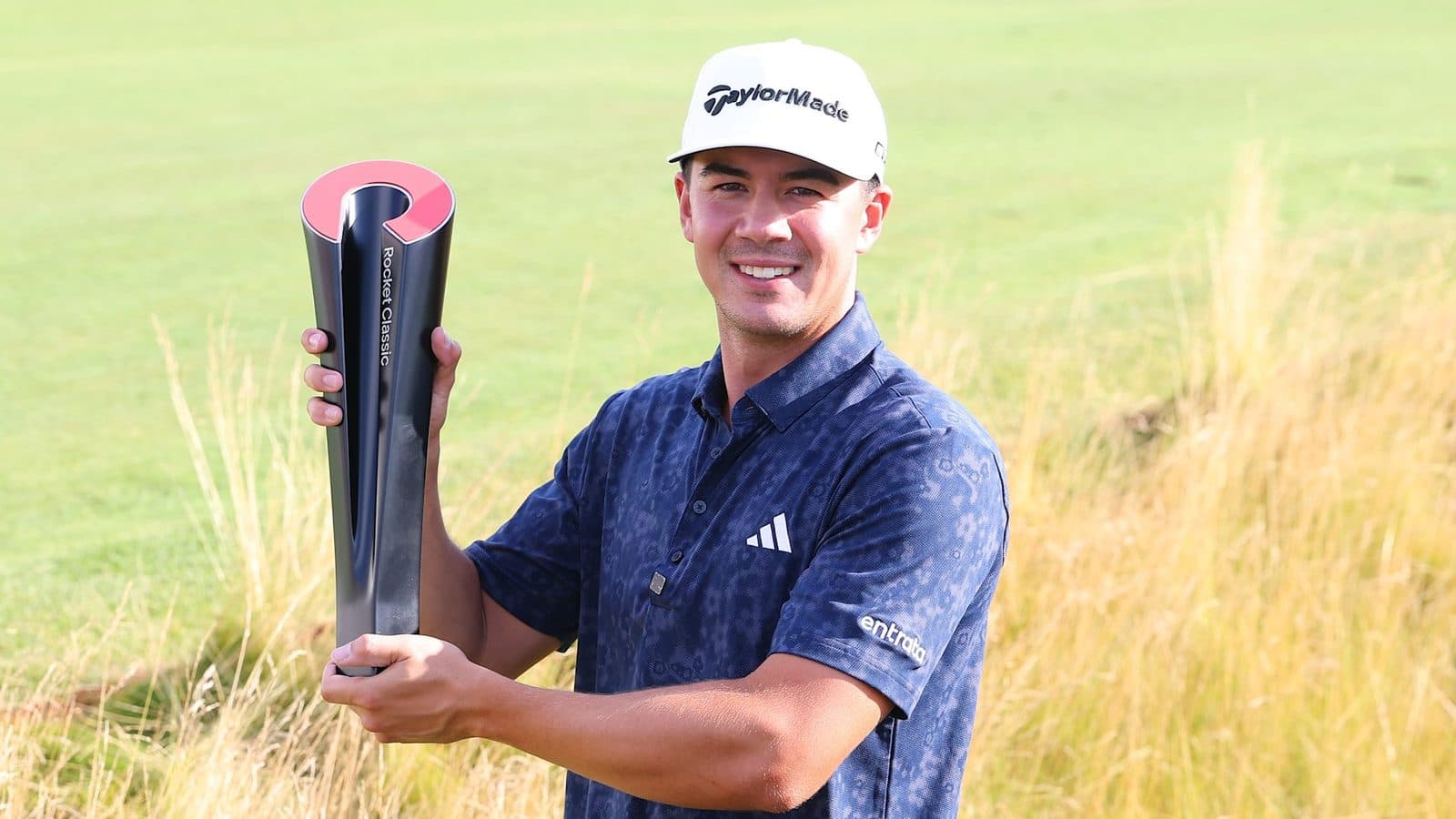
Cameron Young Owns Detroit — But Does the Field Know It?

Detroit Golf Club is a short, scorer-friendly par 70 where putting and iron play do the real work. Here's how the model sees the field shaking out — who to trust in cash, who to leverage in GPP, and where the books left the door open.

Arcline Analytics
00 · OVERVIEW

The Rocket Classic at Detroit Golf Club is, in a word, honest. No tricks, no forced carries you can't plan for, no course-management puzzle that rewards the cautious. It's a short par 70 with four par 3s and only two par 5s, and the field is projected to average 69 strokes per round. That one number tells you almost everything: the whole field is going to make birdies, and the guys who win are going to make a lot of them.

What separates the contenders from the also-rans on a course like this isn't length off the tee — it's what happens from 150 yards and in. The model's course weighting reflects exactly that: putting carries the heaviest influence at 0.9, approach play is right behind it at 0.8, and scrambling around the greens checks in at 0.7. Off the tee matters, but it's the smallest piece of the pie at 0.4. If a guy can stuff irons and drain putts, he belongs in this conversation. If he can't, the salary tag doesn't matter.

That context is the lens for everything that follows. The model isn't just ranking players by world ranking or recent buzz — it's filtering for who actually fits what Detroit Golf Club asks you to do. Sometimes those lists overlap nicely. Sometimes they don't, and that gap is exactly where the edge lives.
01 · WHAT MATTERS HERE

Let's be direct about the course profile before we talk about a single name. Detroit Golf Club is a par 70 that plays short, and its field scoring average of 69 means you're going to need red numbers just to make the cut. The winning score in a week like this isn't -8 or -10 — it's the kind of number that makes casual fans do a double-take.

The model's skill weightings tell a clean story. Putting (0.9) is the single biggest lever. The greens at Detroit Golf Club have historically been where tournaments are won or lost, and that holds in 2026. Approach play (0.8) is nearly as important — in a short field with limited par 5 birdie opportunities, your iron game has to manufacture the chances that other courses hand you. Around the greens (0.7) is the third pillar; on a course this scoreable, the guys who chip and chip it tight and make the recovery par putt keep their momentum going while everyone else is bleeding bogeys they can't afford.

Off the tee (0.4)? It matters, but it's clearly the junior partner here. You don't need to bomb it. You need to find fairways and then — critically — do something with the ball once you get there.

The practical implication for lineup construction: a high fit grade (A or B) from the model carries real weight this week. A player with a C fit grade who projects well in a vacuum may be overvalued by the market. Pay attention to those fit grades. They're doing a lot of work in the sections below.

02 · THE OWNERSHIP LANDSCAPE

Four of the six chalk plays project north of 21% ownership, which means a huge chunk of the field is going to look similar at the top. That's not inherently wrong — sometimes the popular plays are popular for a reason — but it does raise the stakes for differentiation in the middle and bottom of your lineup.

The chalk — projected ownership (model)
PlayerSalaryProjOwnLevFit
Cameron Young$10.5K83.226.7%3.1xB
Chris Gotterup$9.8K76.223%3.3xB-
Si Woo Kim$9.6K76.822%3.5xC
Xander Schauffele$10.2K78.021.7%3.6xC
Nicolai Hojgaard$8.3K66.219.2%3.4xB+
Akshay Bhatia$8.4K64.318.4%3.5xB

The thing worth noting about this ownership cluster: the two highest-projected players — Cameron Young at 26.7% and Xander Schauffele at 21.7% — carry fit grades of B and C respectively. Young is the chalk you can defend most easily; Schauffele's C fit is a quiet flag that the market may be pricing him on reputation more than course match. Meanwhile, Nicolai Hojgaard at 19.2% owns the best fit grade in this group (B+) at one of the lowest salaries ($8,300). That's an interesting wrinkle — he may be the chalk play that actually earns it.

03 · CASH PLAYS

Cash game construction is straightforward in theory and surprisingly hard in practice: you need a floor, you need consistency, and you need enough salary left over to do something useful at the bottom of the lineup. The model's top-projected plays give you the spine.

Top projected — cash core (model)
PlayerSalaryProjOwnLevFit
Cameron Young$10.5K83.226.7%3.1xB
Xander Schauffele$10.2K78.021.7%3.6xC
Si Woo Kim$9.6K76.822%3.5xC
Chris Gotterup$9.8K76.223%3.3xB-
Patrick Cantlay$9.1K73.416.8%4.4xB-
Ben Griffin$8.9K72.413%5.6xB-

Cameron Young is the cash anchor. A projection of 83.2 with a cut probability of 83% makes him the closest thing to a plug-and-play option this week, and his B fit grade is solid on a course that rewards what he does. The salary ($10,500) is steep, but the floor justifies it in cash formats where you need people who make cuts and score.

J.J. Spaun might be the most interesting cash-core name on the board. His fit grade is an A — the best course-match score among any of the top-projected players — and he projects at 72.2 on a $8,700 salary. At 12.7% projected ownership, he's not exactly a contrarian play, but he's also not choking down a lineup the way Cameron Young does. The combination of A fit, reasonable salary, and a cut probability of 77% makes him a strong cash consideration.

Patrick Cantlay ($9,100, 73.4 projection, 16.8% own) is the value play in the upper tier. His leverage score of 4.4 is the best among players projecting above 73 points, which means if he goes low — and he has the game to do it — you'll have differentiation at a position where most lineups are paying up. B- fit is fine; the model likes his floor enough to count him.

Davis Thompson ($7,700) bridges the cash and value tiers with an A fit grade and a 63.0 projection. He's not a star salary, which helps with construction flexibility. At 10.2% ownership, he's not a hidden gem, but on a course that rewards what he does, the model trusts him to build a reasonable floor.

04 · GPP & LEVERAGE

This is where the fun starts. Tournaments are won with differentiation, and differentiation means being in the right place when the field zigs. The model's high-leverage plays are the guys with meaningful ceilings and ownership low enough to actually move the needle in a large-field GPP.

Highest leverage (model)
PlayerSalaryProjOwnLevFit
Sungjae Im$7.0K60.72.5%24.3xB
Harris English$8.5K64.33.1%20.7xC
Jake Knapp$8.8K67.66.8%9.9xB
Corey Conners$7.5K62.26.5%9.6xC
Ryan Gerard$8.6K68.57.4%9.3xC
Jordan Smith$7.2K61.06.8%9xC
Ryo Hisatsune$7.6K60.67.4%8.2xB
Brooks Koepka$8.0K60.18.6%7x

Sungjae Im is the most striking name on this list. A leverage score of 24.3 at 2.5% projected ownership means almost nobody is going to have him — and the model gives him a ceiling of 100.5 with a B fit grade. His salary is $7,000. If Im gets hot on the greens (the primary skill this course demands), a lineup with him at that exposure level wins tournaments. The gap between his fit and his ownership is the opportunity.

Harris English ($8,500, 3.1% own, leverage 20.7) is the high-salary version of the same argument. The C fit is a real concern — the model doesn't love his course match — but the ceiling of 100 and that ownership number suggest the market has moved on from him more aggressively than the model has. Eyes open on the fit, but the price is right for a tournament-winner exposure dart.

Jake Knapp ($8,800, 6.8% own, leverage 9.9, B fit) is the leverage play with the most substance behind it. His ceiling of 108.5 is the highest in the high-leverage group, his fit grade is a respectable B, and nearly 7% ownership keeps him accessible without making him crowded. He's the leverage play you can put in multiple lineups without feeling like you're forcing it.

Hideki Matsuyama ($9,000, 10.7% own, leverage 6.5) sits at the edge of the leverage tier — not low-owned by any stretch, but at a salary that creates real differentiation from the Cameron Young chalk builds. His ceiling of 108 and B- fit make him viable in GPPs where you need a high-salary pivot away from the top chalk.

05 · THE PUNT-LEVERAGE TIER

At the minimum-salary end of the board, the model found something remarkable: a cluster of A-fit players at prices so low they create roster construction opportunities that simply don't exist at the top. The catch, as always, is that the projections and cut probabilities reflect real risk. These are punts in the truest sense — low floor, real ceiling, and massive leverage if they catch lightning.

Best course-fit value (model)
PlayerSalaryProjOwnLevFit
Davis Thompson$7.7K63.010.2%6.2xA
Taylor Moore$7.0K55.01.8%30.6xA
Chris Kirk$6.9K54.10.8%67.6xA
Taylor Pendrith$7.0K52.51.2%43.7xA
Lucas Glover$6.9K49.60.5%99.2xA
Mark Hubbard$6.4K48.84.2%11.6xA
Chad Ramey$6.5K47.00.1%470.3xA
Vince Whaley$6.4K46.32.7%17.2xA

Lucas Glover is the most eye-catching entry. A leverage score of 99.2 at 0.5% ownership means almost no one is touching him. His A fit grade is legitimate — the model sees real course-skill alignment — but his projection of 49.6 and cut probability of 52% tell you the model doesn't expect him to be a factor most weeks. In a GPP where you're stacking elsewhere and need a $6,900 salary slot to work hard, Glover is the name to know.

Chad Ramey ($6,500, 0.1% own, leverage 470.3, A fit) is the single most extreme leverage number on the board. At one-tenth of one percent ownership, a single well-timed Ramey round could separate a lineup from the entire field. The ceiling of 84.5 isn't massive, but in a week where cash targets are manageable, he's a genuine tournament differentiator if everything clicks.

Taylor Pendrith ($7,000, 1.2% own, leverage 43.7, A fit) and Taylor Moore ($7,000, 1.8% own, leverage 30.6, A fit) are both worth consideration as a pair — same salary tier, excellent fit grades, and ownership so low that either one in a winning lineup would be the decisive edge. Chris Kirk ($6,900, 0.8% own, leverage 67.6, A fit) completes this tier as another name the field has essentially ignored.

The unifying theme here: every player in this tier carries an A fit grade. The model isn't recommending cheap salary dumps — it's identifying players whose skill sets genuinely match what Detroit Golf Club asks for, priced at levels where the market has moved on. That's the distinction between a smart punt and a desperation play.

06 · TARGET SCORES

Here's the honest calibration check before you finalize anything. Detroit Golf Club plays easy — the field average is 69 — and that means your lineup needs to reflect a world where birdies are normal and the only real question is how many.

Target scores — 6-golfer DK roster
Cash line
418
Top 10%
502
Top 1%
566
Perfect lineup
706

Cash at 418 is the number to clear first. That's not a low bar in an absolute sense, but in a scoring-friendly environment with a projected field average of 69, it's achievable with a solid chalk-heavy build. Top 10 at 502 is where lineup construction starts to matter — you need a few things to go right, not just the safe picks. And the tournament-winning target of 566 is significant: you need at least one or two players who genuinely run hot. That's why the ceiling numbers on the high-leverage plays matter as much as the projections. A Sungjae Im at his 100.5 ceiling, stacked with a Knapp at 108.5, starts to make 566 look achievable in the right build.

07 · THE BETTING CARD

The outright market came up empty this week — no player cleared the model's edge threshold for a win bet. That's not a commentary on the quality of the field; it's just an honest read on the market. The books priced the outright board tightly enough that there's no value in chasing futures. That happens, and it's worth saying plainly rather than manufacturing a pick to fill a card.

The top-20 placement market, however, is a different story. The model found eight plays with meaningful edge, and a few of them deserve real attention.

Xander Schauffele top 20 at +110 is the largest edge by percentage points: the model has him at 52.7% to finish top 20 against an implied book probability of 44.0%, an 8.7-point gap. The C fit grade keeps this from being a slam dunk, but a 52.7% model probability at even money is a real number, and the edge is large enough to warrant a position.

J.J. Spaun top 20 at +170 is arguably the most complete bet on the card. The A fit grade means the model's confidence in his course alignment is high, the 41.6% model probability against a 33.8% implied book probability represents 7.7 points of edge, and +170 pays out meaningfully when it hits. The combination of fit, edge, and odds makes this the play that ties back most cleanly to everything the model likes about Spaun this week.

Patrick Cantlay (+155, 7.4pp edge) and Ben Griffin (+170, 7.2pp edge) are the next two in line. Cantlay's edge is real; his model probability of 45.7% against 38.3% implied is clean. Griffin's B- fit and 42.4% model probability at +170 is similarly attractive — the odds pay for the uncertainty.

Si Woo Kim at +125 (6.9pp edge) is the high-volume play — lower odds, meaningful edge, and the second-highest model probability in the top-20 group at 48.4%. If you're building a parlay or a multi-bet card, Kim is the one that anchors it.

Further down: Hideki Matsuyama (+175, 6.2pp), Ryan Gerard (+200, 6.0pp), and Nicolai Hojgaard (+225, 5.3pp) all clear the threshold at prices that reward patience. Gerard and Hojgaard in particular offer the kind of odds that don't need to hit every week to be profitable over time.

08 · THE BOTTOM LINE

Detroit Golf Club is a place where the model earns its keep because the course has a clear, consistent fingerprint. Putting and approach play run the show. Fit grades matter more than they do at a generic, all-around test. And a short par 70 with a field average of 69 means the talent at the bottom of the ownership board can fire a low round just as easily as the chalk at the top.

The cash core builds around Cameron Young and J.J. Spaun — the highest projection on the board and the best course fit among the top-projected group, respectively. That combination gives you a defensible floor and the right kind of course-skill alignment without doubling up on chalk where the fit doesn't back it up.

In GPP, the model points toward Sungjae Im as the leverage name that could genuinely win you a tournament. The ownership is almost nonexistent, the B fit is real, and $7,000 frees up salary to do a lot of interesting things elsewhere. Pair him with Jake Knapp for a two-player leverage stack that doesn't require a miracle — just a couple of guys catching the greens at the right moment on a course that rewards exactly that.

On the betting side: Spaun top 20 at +170 is the play that ties everything together most cleanly. Great fit, real edge, good odds. Schauffele's 8.7-point top-20 edge at +110 is the larger edge by the numbers, and it's worth a position even with the fit concern. The outright market? Hard pass this week. The books got there first.

One last thing: the punt tier is loaded with A-fit players at prices the market has ignored. Chad Ramey, Taylor Pendrith, Chris Kirk — if one of them catches fire, they're the reason a GPP lineup wins. You don't need all of them. You might only need one. That's the whole point.

THE READ · WEEKLY EMAIL

One email a week. One edge, one receipt, one storyline. No spam, unsubscribe anytime.

one email a week, nothing else