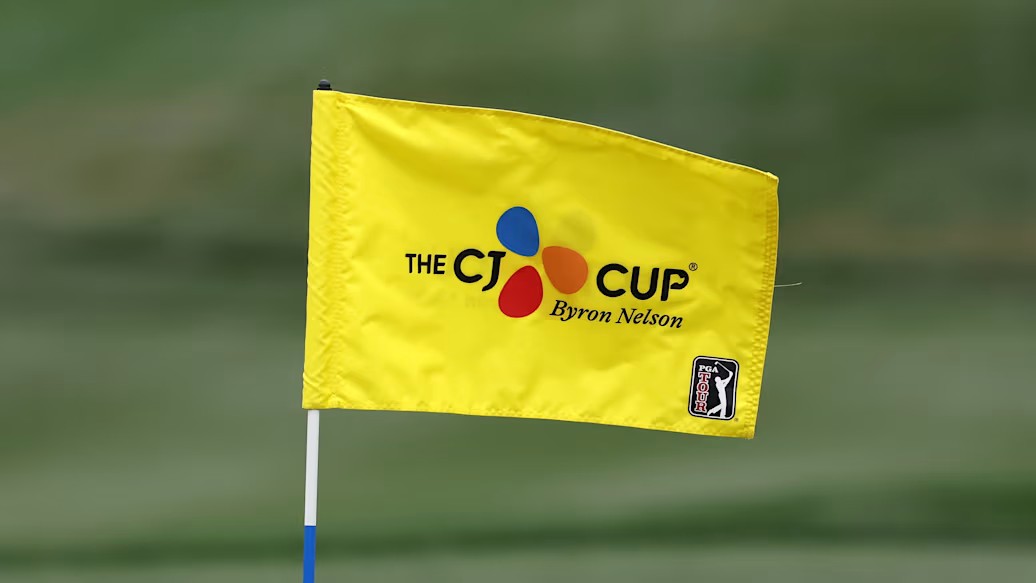
PAR 71 · 7,385 YARDS · $10.3M PURSE · 147-PLAYER FIELD · 36-HOLE CUT
TPC Craig Ranch is not the same course Scottie Scheffler shot 31-under par on in 2025. A $22 million Lanny Wadkins renovation rebuilt the bunker program, reduced green sizes, repositioned four green complexes, converted the turf to Stadium Zoysia fairways and 777 Bentgrass greens, and made Rowlett Creek a genuine hazard for the first time. The winning score target dropped from the low-to-mid 20s under par to Wadkins’ explicit goal of 12–15-under. This is a first-look week for every player in the field — no one has tournament reps on the renovated layout.
The Wadkins renovation changes everything
TPC Craig Ranch was originally designed by Tom Weiskopf in 2004 and hosted its first Byron Nelson in 2021. The course quickly became the most scoreable venue on the PGA Tour — the field averaged -1.93 strokes per round against par, the highest birdie-to-bogey ratio on Tour at 2.2. That all changed after the 2025 event, when Scottie Scheffler tied the PGA Tour’s all-time 72-hole scoring record at 31-under par. The ownership group commissioned a $22 million renovation led by Lanny Wadkins and the Wadkins Design Group. The project ran from summer 2025 through spring 2026 and represents the first major structural overhaul in the course’s 22-year history. Wadkins — himself a 1973 Byron Nelson champion and 21-time PGA Tour winner — set an explicit target: bring winning scores down to 12–15-under par and return genuine strategic demands to the layout.
What Wadkins actually changed
The renovation did not reroute the course. Weiskopf’s routing and core framework remained intact. What changed was almost everything else. Greens on holes 3, 4, 5, and 7 were repositioned to alter approach angles. Green surfaces were made smaller across the course, increasing precision demands. Contouring was added with more pin positions. The bunker program was rebuilt from the ground up — Wadkins repositioned bunkers closer to landing zones and green complexes, made clusters tighter, and added visual clarity and penal depth that the original design lacked. The turf profile was overhauled: Stadium Zoysia replaced the fairway grass for firmer, faster-playing surfaces. TifTuf Bermuda covers rough and tee boxes. The greens were converted to 777 Bentgrass — a meaningful surface change from what players saw in 2021–2025. The par-5 12th, which had been converted from a par-5 to a par-4 in 2023, received significant changes to its approach and green complex. New tee boxes extend the course’s range of setup options.
Rowlett Creek — the course’s underused enforcer
Rowlett Creek is the defining natural feature of TPC Craig Ranch, crossing the course 14 times through its routing. Under the old setup, it was largely irrelevant — a scenic backdrop rather than a genuine hazard. Offline tee shots rarely found trouble. Wadkins reportedly repositioned waste areas and native rough corridors alongside several creek crossings to make errant drives more consequential. Wind remains the primary external scoring variable — the course sits on exposed DFW flatlands where gusts can shift club selection by 2–3 clubs on par-3s and fundamentally change the par-5 strategy. On calm days, scoring should drop. When the Texas wind comes, the post-renovation layout has enough new teeth to bite.
777 Bentgrass greens — the defining surface change
This is the renovation detail that matters most for CADDIE’s model. The 2021–2025 version of Craig Ranch played on Bentgrass greens, but the variety and conditioning profile has changed with the rebuild. The 777 Bentgrass conversion was selected specifically for its ability to run fast and hold a firm surface in Texas heat while still accepting approach shots that are on-line. Green sizes have been reduced from the Weiskopf originals — the approach precision requirement is meaningfully higher than it was a year ago. Putting style matters: players who struggle on faster, firm Bentgrass surfaces with pronounced directional movement face a different test here than the receptive, putt-anything surfaces Craig Ranch was known for.
Crossover courses — documented correlation
The post-renovation Craig Ranch is a new course archetype, so historical comps must be chosen carefully. The best-fit venues for 2026 are tracks that share the fast Bentgrass surface with reduced green sizes and require approach precision from varied distances — not just wedges: Muirfield Village / Memorial (firm Bentgrass, premium on approach precision and course management), Harbour Town / RBC Heritage (small, sloped greens demanding ball-stopping approach play), Sedgefield Country Club / Wyndham Championship (Bentgrass surface, wind-exposed, requires putting consistency), and Colonial / Charles Schwab (DFW flatlands wind, Bentgrass, premium on iron play and scrambling). Pre-renovation Byron Nelson form is partially useful as a field-familiarity signal, but do not weight raw SG history at Craig Ranch heavily — the renovation has changed the course’s fundamental statistical fingerprints.
The pre-renovation Craig Ranch was a course where SG: Putting was the dominant separator — the old birdie-fest rewarded anyone who got hot on Bentgrass and punished nobody severely for missing fairways. That model is partially obsolete. Wadkins reduced green sizes, repositioned bunkers closer to greens, and added approach-angle complexity on several key holes. CADDIE’s read: approach play from 150–200 yards has been elevated from secondary to co-primary status. Putting remains critical — this is still a Bentgrass scoring venue, not a grind course — but the player who wins at 12-under in 2026 cannot putt their way there alone.
TPC Craig Ranch plays as a par 71 at 7,385 yards after the Wadkins renovation. Rowlett Creek crosses the routing 14 times. Two par-5s remain (holes 2 and 18). The course opens with scoring opportunities before the more demanding mid-round holes, and the back nine’s wind exposure creates the primary late-round separation. Green sizes are smaller than the pre-renovation design — misses into bunkers are more common and more penal.
HOLE 1 · PAR 4 · 420 YDS
Tone-setter — birdie expected
Opening par-4 that has traditionally served as one of the most scoreable holes on the course. Wide fairway, receptive approach angle. The renovation added bunker complexity around the green complex, but this remains a hole where the field expects birdie. Contenders who bogey here in the final round face unnecessary pressure. The tone-setter for a good round.
HOLE 2 · PAR 5 · 560 YDS
Par-5 scoring engine — eagle possible
One of only two par-5s on the course after the 2023 conversion of the 12th. Rowlett Creek crosses the fairway in the landing zone, requiring a committed tee shot over or around the hazard. The green is reachable in two for the longer hitters who execute off the tee. Par here for a contender is a damaging result. Eagle conversion is real on calm days.
HOLE 3 · PAR 4 · 430 YDS
Repositioned green — renovation effect
One of the greens repositioned in the Wadkins renovation. The new green angle adds approach complexity — players who miss position off the tee find a more demanding iron into the adjusted surface. A hole where renovation effects are most visible. Bogey rate has likely increased relative to 2021–2025 baselines.
HOLE 4 · PAR 3 · 200 YDS
Wind-exposed one-shotter
Mid-length one-shotter with one of the rebuilt green complexes. The renovation added contour and tightened the bunker profile. Wind is a significant variable here — the exposed DFW flatlands can push this into a long-iron or fairway hybrid club even from an apparent 190-yard pin. Par here in wind is a quality result.
HOLE 5 · PAR 4 · 445 YDS
Repositioned green — iron play decides
Another hole where the green was repositioned in the renovation. Approach angle from the preferred fairway side rewards players who challenge the left side off the tee. The green complex received contouring that creates more two-putt difficulty from certain positions. Iron play from 160–185 yards determines outcomes here.
HOLE 6 · PAR 4 · 390 YDS
Front-9 scoring window
Shorter par-4 that remains one of the better scoring opportunities on the front nine despite the renovation. The approach is a short iron into a green that — while smaller than before — still presents a reasonable target. Players who fail to birdie this hole on a scoring day pay a cumulative price over four rounds.
HOLE 7 · PAR 4 · 415 YDS
Repositioned green — course IQ test
Green repositioned in the Wadkins renovation. The new configuration altered the ideal approach angle, demanding more precision off the tee to access the correct side of the fairway. A hole where course-management IQ matters — players who know the post-renovation setup have an edge over first-timers.
HOLE 8 · PAR 3 · 175 YDS
Wind variable — par is the target
Shorter par-3 that typically offered a birdie opportunity at the old Craig Ranch. Post-renovation bunker changes around the green make par the percentage target when pins are on the tougher shelves. The wind variable here is significant — a hole playing 175 yards in calm conditions can play 195 in a northwest gust.
HOLE 9 · PAR 4 · 455 YDS
Front-9 closer — scrambling plays
Longer par-4 to close the front nine. The approach requires a mid-iron into a green that offers limited room for error. Players who bogey here to end the front nine often struggle to recover on the back. Scrambling ability plays — the bunker renovation created more greenside sand exposure on longer approach misses.
HOLE 10 · PAR 4 · 400 YDS
Back-9 reset — birdie opportunity
Shorter par-4 to open the back nine — a reset hole that should generate birdies from the field. The renovation kept this hole in the scoring column. Players who are struggling on the front nine and need to bounce back have an early opportunity here. The setup does not demand a driver.
HOLE 11 · PAR 4 · 435 YDS
Rowlett Creek proximity — left miss penal
Mid-length par-4 where Rowlett Creek is in closer proximity to play. Post-renovation waste areas and native rough alongside the creek corridor have made left misses more expensive than in prior years. Fairway positioning here is meaningful — approach from the proper side of the fairway takes the penalty zones out of the equation.
HOLE 12 · PAR 4 · 493 YDS
Longest par-4 — former par-5
The former par-5 converted to a par-4 in 2023. Now the longest par-4 on the course. In wind, this hole plays as a genuine test of par-saving. Players reaching this hole late on Sunday carrying bogeys cannot afford to push for birdie — the approach is a long iron or hybrid into a green that was rebuilt in the Wadkins renovation. One of the most physically demanding holes on the course.
HOLE 13 · PAR 4 · 410 YDS
Mid-round scoring window
Mid-length par-4 that offers a scoring opportunity in the heart of the back nine. The fairway is generous enough off the tee that players can go after a scoring iron approach. The renovation's bunker changes add some greenside peril, but players who execute the tee shot have a short iron into a makeable target.
HOLE 14 · PAR 3 · 220 YDS
Wind-exposed long par-3
Longer par-3 on the back nine. Wind exposure is at its highest here — the prevailing southwest Texas wind hits players directly or on the quarter from the left. Club selection is the defining variable. The green complex was rebuilt with added contouring and a tighter bunker surround. Par here on tournament days is earned, not automatic.
HOLE 15 · PAR 4 · 380 YDS
Scoring window before the stretch
Shorter par-4 that is one of the better scoring opportunities on the back nine. Driveable in calm conditions for the bombers, though the renovation may have added strategic complexity to the approach side. Players who can take advantage of 15 after grinding through 12–14 have a scoring window before the final stretch.
HOLE 16 · PAR 4 · 440 YDS
Rowlett Creek danger zone
Rowlett Creek factors into the tee shot and approach here in its most consequential appearance on the back nine. The renovation reportedly tightened the waste area corridors along the creek. A left miss off the tee can find penalty areas that were previously out-of-bounds territory but now present genuine scoring damage. Wind pushes players toward the danger side. A momentum-killing hole when it turns.
HOLE 17 · PAR 4 · 420 YDS
Signature hole — tournament decider
The course's signature hole and the most photographed on the property. The official tournament has designated this the ‘best view’ hole with premium spectator infrastructure. The post-renovation green complex is positioned to maximize the visual drama of Rowlett Creek framing the approach. For competitors, this is where tournament position solidifies or collapses. The approach demands a precise mid-iron with wind complicating club selection. Par under pressure on Sunday is a quality result.
HOLE 18 · PAR 5 · 550 YDS
Closing par-5 — Sunday drama
The closing par-5 — one of two on the course. Rowlett Creek runs through the closing hole's environment. The green is reachable in two for most of the field under calm conditions, making eagle and birdie legitimate Sunday outcomes. Players trailing by one have a finishing opportunity. Players leading can choose the conservative three-shot line. The renovation added bunker complexity around the green to make approach execution more demanding even on lay-up lines.
Elite Bentgrass putter
This is still, at its core, a putting venue. Even with smaller greens and more bunker exposure, the player who gains the most strokes on the 777 Bentgrass over four rounds wins. Target players with documented putting gains at Muirfield Village, Harbour Town, and Colonial — courses that share the fast Bentgrass surface profile. Chronic Bentgrass putting weakness is disqualifying regardless of any other skill.
Approach precision from 150–200 yards
The renovation’s most significant effect is on mid-iron approach demand. Smaller greens, repositioned surfaces, and tighter bunker surrounds mean the player who hits it close from 155–185 yards gains more than the player who converts wedge approaches alone. The pre-renovation wedge-fest model understates this category.
Course management IQ — first-time vs. renovation-aware
Many players in the field have multiple Craig Ranch starts. But the post-renovation course has new angles on holes 3, 4, 5, and 7 that reward players who have done homework on the changed approach geometries. First-time players at the renovated Craig Ranch face a knowledge gap that is most visible on those four holes.
Wind management — Texas flatlands exposure
TPC Craig Ranch sits on exposed DFW terrain with no natural wind barriers. When the southwest wind arrives — which it typically does by Thursday afternoon — club selection shifts dramatically on par-3s, the approach to 14, and the tee shot on 16. Players who have experience managing scoring expectations in Texas wind (Colonial, AT&T Byron Nelson history, TPC Four Seasons results) have a documented edge.
Scrambling efficiency — bunker savvy
The renovation created more bunker encounters for the field. Around-the-green scrambling from sand was a secondary skill at the old Craig Ranch. It is now a weekly requirement. Players who rank in the top 25 in sand save percentage and short-game scrambling have gained structural value relative to prior years.
Run every player through this five-filter framework. The more boxes they check, the stronger the play. CADDIE’s highest-confidence targets clear all five filters. Note: historical Byron Nelson SG data from 2021–2025 is useful as a field-familiarity signal but cannot be used as a primary model input — the renovation has materially changed the course’s statistical fingerprint.