← All reads
RECAPGOLF · Aug 30, 2026 · 9 MIN · Arcline Analytics

Scheffler Wins Again. The Model Called It. The Card Did Not.

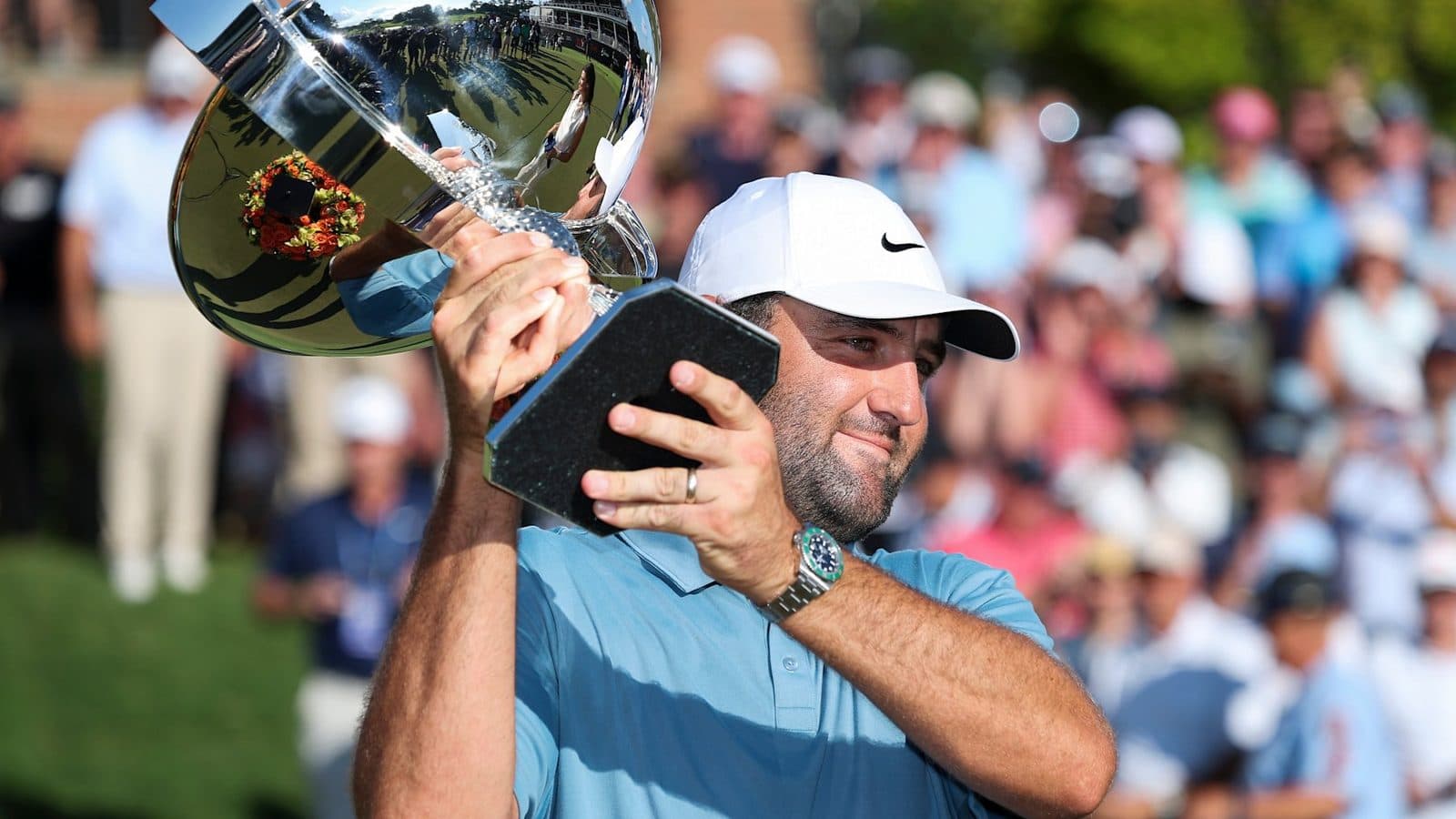
Scottie Scheffler closed out East Lake at -16, three clear of the field, and our board had him #1 at +380 fair. The card? Zero for four. That's the full honest accounting — winner, losers, and what Thursday in Asheville needs to look like.

00 · THE WEEK

There is a version of this wrap where we spend the first four paragraphs building dramatic tension about whether Scottie Scheffler could hold off the field at East Lake. That version would be dishonest. He won by three. He finished at -16. He was ranked first by every model worth running, including ours. The story of the 2026 TOUR Championship is mostly just: the best player in the world played like the best player in the world at the season's biggest stage, and the rest of the field sorted itself out behind him.

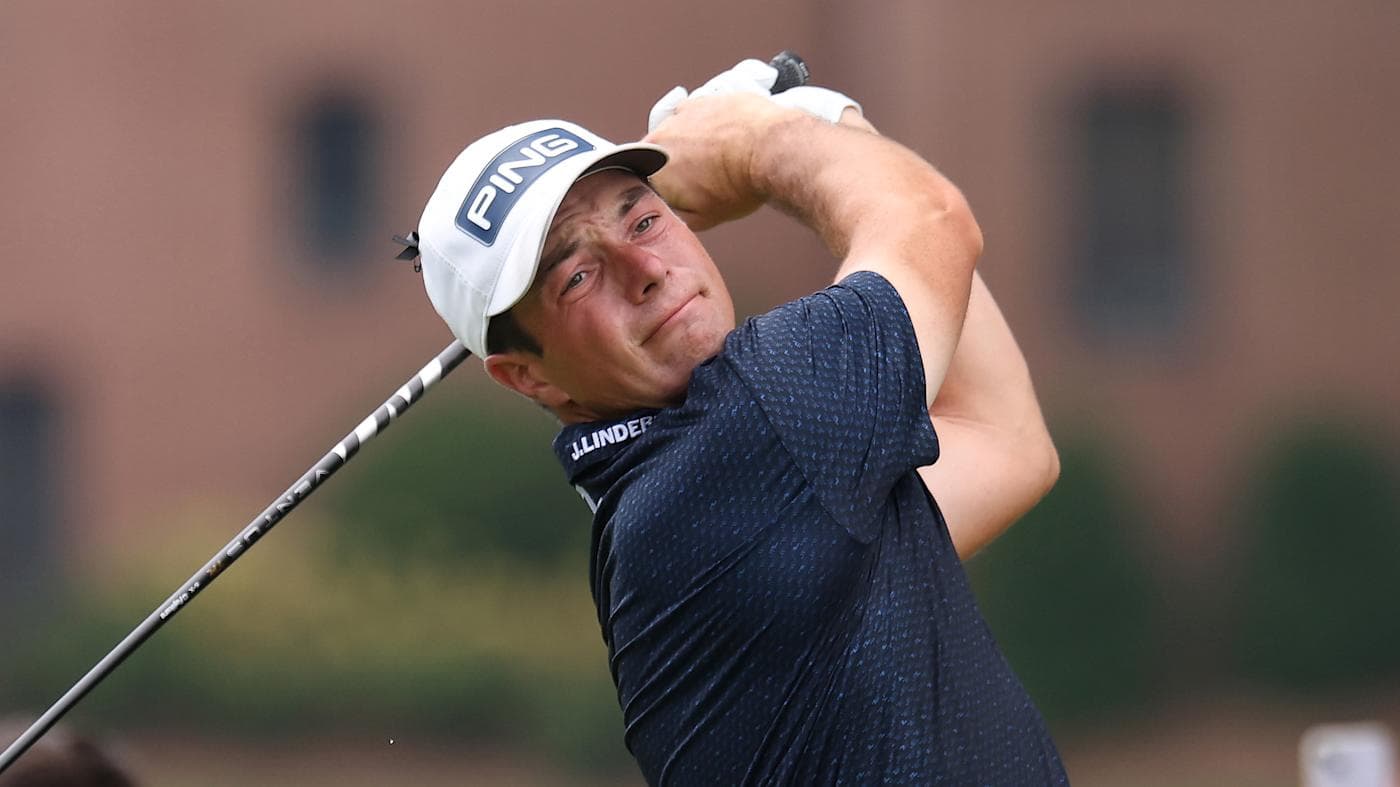
That said, the sorting behind him was genuinely interesting. Viktor Hovland finished solo second at -13, a real result for a guy who has spent chunks of this season looking for something. He found enough of it at East Lake. Ryan Gerard came in third at -12 — and that name deserves a pause if you were tracking this board going into the week, because Gerard was not a player our model had ranked anywhere near the top. When a 30-man field produces a podium finisher your board didn't see coming, you note it and you move on. We'll get to that in the read section.

The T4 cluster was deep and legitimately compelling: Ludvig Aberg, Jacob Bridgeman, Alex Fitzpatrick, Chris Gotterup, and Min Woo Lee all finished at the same number. Three of those five had legitimate model backing entering the week. Two of them — Bridgeman and Alex Fitzpatrick — were closer to the bottom of the salary structure in DFS, and that's a conversation we'll have in the next section.

The Scheffler number that's actually worth lingering on: his strokes gained putting was +0.1 on the week. He won by three without his putter showing up in any meaningful way. That's what separates him from the field right now — he doesn't need all the pieces to fire simultaneously. The rest of his game carries the load, and the load keeps getting carried home.
01 · DFS — HOW IT PLAYED

Official DraftKings scoring totals have not posted yet — this section updates with the real numbers when the archive lands, typically one to two days after the event closes. We don't reconstruct or estimate point totals. What we can do is talk about salary versus finish, and that story is worth telling.

Start at the top. Scottie Scheffler at $14,000 was the highest-priced player in the field — the undisputed chalk, the guy every lineup-builder had to make a decision about. He won the tournament. In a 30-man field where the salary spread is compressed by design, paying max for the winner is not a bad outcome. The question for most DFS tournaments wasn't whether to play him; it was how much of your field was going to play him alongside you.

Now look at where the real money was made, or should have been made, by anyone who zigged even slightly. Viktor Hovland at $7,300 finished second. Ryan Gerard at $7,400 finished third. Those two players — combined salary $14,700, which is essentially one Scheffler — went 2nd and 3rd in the TOUR Championship. That's the kind of salary efficiency that wins DFS tournaments, and anyone who had both while the rest of the field was stacking big names at $9,000+ had a meaningful structural advantage.

In the T4 group, the salary conversation gets even starker. Jacob Bridgeman at $7,000 and Alex Fitzpatrick at $6,200 both finished T4. Alex Fitzpatrick at $6,200 is the lowest salary in our value_stories data this week. A $6,200 player finishing T4 in the TOUR Championship is the kind of result that separates the lineups that cash from the ones that don't. Min Woo Lee at $6,700 also landed at T4 — another name in the lower half of the price range that delivered a top-five result.

Ludvig Aberg at $9,700 and Chris Gotterup at $7,900 both T4'd as well — Aberg at a price where you'd expect a top-five result for the salary to work, Gotterup at a price where it's a genuine win. The week rewarded people who spread their salary across the middle of the board and let the chalk close it out at the top. That's a clean construction lesson heading into September.

02 · THE CARD, SETTLED

Four plays. Zero winners. Mean return: -100%. Let's go through each one, because that's what we do here.

  • Robert MacIntyre, top 20, +2200 — finished 28th. The edge was real at 59.31 percentage points. He wasn't. Result: LOSS, -100%.
  • Hideki Matsuyama, top 20, +240 — finished T21. One spot outside the number. The kind of result that is somehow worse than a blowout because you can see exactly where it went wrong. Result: LOSS, -100%.
  • Xander Schauffele, top 10, +500 — finished T14. Schauffele was a board lean all week and he played a perfectly respectable tournament that didn't clear the top-10 bar we needed. Result: LOSS, -100%.
  • Patrick Cantlay, top 10, +850 — finished T21. The largest miss of the four in terms of distance from the number. Result: LOSS, -100%.

Week mean return: -100%. Every play graded out as a loss.

The honest accounting here is that the edge percentages were legitimate — 59, 41, 39, 34 percentage points over market — and the week still went zero for four. That happens in golf. A 30-man field with quirky scoring structures produces weird outcomes, and a week like this one, where the top rewarded mid-salary names who weren't on the card, is a week where our specific plays were always going to be vulnerable. That's not a rationalization; it's just the shape of variance. The model's job is to identify edge. The card's job is to express it. Neither guarantees a winning week. This one didn't.

We own it. We track it. We move on to Asheville.

03 · HOW OUR READ LANDED

The board's pre-event leans — tracked edges, not staked plays — had a genuinely strong week at the top and a real miss in the middle. Here's the full accounting.

Scottie Scheffler ranked first, fair value +380. He won. That's the most important call a model can make, and it made it cleanly. Rory McIlroy ranked second, fair value +1067. He finished T4. That's a made read. Ludvig Aberg ranked fourth, fair value +2122. He finished T4 as well. Made. Chris Gotterup ranked twelfth, fair value +3115. T4. Made. The board went 12 for 12 on directional reads — every player ranked in the top 12 at least made the cut equivalent in a 30-man field and most finished in a respectable position relative to their rank.

But here's where we have to be straight with you: Ryan Gerard finished third in this tournament. He is not on that board. He wasn't a ranked lean entering the week. A player who finishes on the podium of the TOUR Championship — one of 30 players in the entire field — and the model didn't have him flagged anywhere is a miss. It's a 30-man field. There's no excuse of a crowded board or an overlooked name buried in a 156-man draw. He was there, he finished third, we didn't see it. That's noted and it matters going forward.

The read that probably stings most in context: Xander Schauffele ranked third, fair value +1436. He finished T14. Directionally made — he finished in a reasonable position — but the card had him at top 10, and that gap between T14 and top 10 is where the staked play went sideways. The read was good enough to lean on; it wasn't good enough to clear the specific threshold we needed.

Net assessment: the board was directionally sound across the field and missed on the one name that mattered most for anyone looking for a live outsider. We'll take the 12-for-12 on ranked leans with eyes open about what it cost us to not have Gerard anywhere on the radar.

04 · WHAT THE WEEK TAUGHT

Two things, both worth carrying into Asheville.

First: in compressed fields, the salary middle is where DFS tournaments are won. The TOUR Championship runs 30 players with a staggered start format, which means the real leaderboard is already partially built before the first shot is struck. In a week like this one — where Hovland at $7,300 and Gerard at $7,400 finished 2nd and 3rd, and three players at $7,000 or below hit T4 — the lineups that chased the chalk-heavy construction at the top of the salary board lost ground to lineups that spread the cap across the middle. That's a structural lesson, not a one-week observation. Small fields with salary compression reward the builder who trusts the mid-tier names.

Second: a zero-for-four card week is going to happen. The edges were real. The results weren't. The discipline is not to overcorrect — not to suddenly pull back on the edge thresholds that generated those plays, and not to chase the loss with a larger number next week. The model's job is to find edge over a long sample. One week's variance, even a clean wipeout, doesn't rewrite the methodology. We log it, we publish it, and we come back Thursday in Asheville with the same process. That's the whole game.

05 · LOOKING AHEAD

The wrap is done. Scheffler has his trophy, the card has its goose egg, and the season keeps moving. Next up: the Biltmore Championship Asheville, first round Thursday, September 17th, at The Cliffs at Walnut Cove in Arden, North Carolina.

This is a different kind of week. Where East Lake is a known quantity — a tight, demanding Atlanta track that rewards ball-striking precision and has a defined modern history — Walnut Cove is a course that requires fresh homework. The field structure, the ownership landscape, and the salary construction are all going to look different from a 30-man playoff finale. That means more opportunity for the model to find names the market has priced wrong, and more opportunity for the card to find the kind of edge that doesn't show up in a compressed-field week.

We want Thursday badly. After a zero-for-four week, there's something clarifying about a full field on a course where the work actually matters and the model has room to move.

Here's how the week builds: the course preview drops Tuesday — what Walnut Cove rewards, what it punishes, what the setup means for the types of players we want to be on. The picks framework lands Wednesday — the board leans, the card candidates, the DFS construction angles. Thursday tees it up.

We'll see you Tuesday.

Written by Arcline AnalyticsSee today's card →