← All reads
PICKS FRAMEWORKGOLF · Aug 12, 2026 · 12 MIN · Arcline Analytics

Scheffler at Southwind: Building Around the Obvious and Beating It

The best player in the world is the chalk, the favorite, and still the model's top play. So how do you win a GPP when everyone knows that? The FedEx St. Jude DFS and betting playbook, from the foundation up.

00 · OVERVIEW

Welcome to Memphis. The FedEx Playoffs are underway, the field is 69 players deep, and TPC Southwind is doing what it always does — separating the people who can truly control a golf ball from the people who are pretending to. This is a parkland track that punishes imprecision and rewards the kind of ball-striking that looks boring on a highlight reel and gorgeous on a leaderboard.

The model has opinions about who wins here. Some of those opinions overlap heavily with the market. One of them overlaps so much, and so correctly, that we actually staked real units on it. We'll get to that. But the broader story of this week's playbook is the classic tension in a small-field event: the guy you need is the guy everyone else has, and the guys who can make you money in GPP are names that require some genuine conviction to roster at sub-1% ownership. That tension is where this framework lives.
01 · WHAT MATTERS HERE

TPC Southwind's course profile in the model weights approach play and around-the-green work at 0.9 — the highest marks on the card — with off-the-tee at 0.7 and putting at 0.6. What that tells you, practically: this is not a place where you bomb it sideways and make 40-footers and survive. Precision is the game. The guy who misses to the wrong spots, or who can't get up-and-down when the course inevitably squeezes him, is going to bleed strokes in ways that don't show up dramatically on any single hole but absolutely destroy a scorecard over 72.

Course fit grades in the model reflect this. The A-grades go to players with genuine ball-striking credibility and reliable short-game execution. C-grades aren't a death sentence — plenty of C-fits win golf tournaments — but they're a signal to look twice before paying up or going heavy in ownership. When the model says a player is a C-fit at the highest salary tier, that's a meaningful discount to apply mentally, even if the raw projection holds up.

The field of 69 also matters for DFS construction. Fewer players means the cut is competitive — the model projects every player in this brief at 100% cut probability, meaning the field quality is compressed and the separation at the top is going to be earned, not gifted. Target scores will reflect that compression. Plan accordingly.

02 · THE OWNERSHIP LANDSCAPE

Let's look at who the field is going to be rostering heavily, because in a 69-player event, ownership concentrates fast and the chalk can genuinely hurt you if you're not thoughtful about it.

The chalk — projected ownership (model)
PlayerSalaryProjOwnLevFit
Tommy Fleetwood$10.2K85.227.4%3.1xA
Xander Schauffele$10.0K85.022.8%3.7xB-
Collin Morikawa$9.3K81.020.2%4xA
Ludvig Aberg$9.1K81.119%4.3xC
Viktor Hovland$8.4K79.519%4.2xB+
Justin Thomas$8.1K82.018.6%4.4xB+

Tommy Fleetwood leads the ownership board at 27.4% — and honestly, it makes sense. He's the highest-projected player after Scheffler, he has an A course-fit grade, and he's priced at $10,200, which feels accessible. The problem is that his leverage score is 3.1, the lowest of the group. If you're in a GPP and you have Fleetwood, you need basically everyone else in your lineup to be contrarian, or you're just building a cash-game lineup at GPP stakes. His fit is real. His chalk status is a construction tax.

Xander Schauffele comes in at 22.8% ownership with a B-minus course fit — which is the quiet red flag of the week. He's going to be in one out of every four or five lineups and the model isn't confident he's ideally suited to what Southwind asks. That's a fade signal in large-field GPPs, not a must-roster. Collin Morikawa at 20.2% is the opposite story — A course-fit, legitimate ball-striker, and a leverage score of 4.0 that's better than Fleetwood's. If you're going chalk, Morikawa is the chalk worth having. Ludvig Aberg at 19.0% draws a C course-fit grade, which at that ownership level is something the model flags quietly. Viktor Hovland sits at 19.0% with a B-plus fit — a middle-of-the-road chalk option that neither excites nor concerns the model. Justin Thomas at 18.6% ownership on an $8,100 salary with a B-plus fit is the most interesting chalk name — he's projecting 82.0 points at a salary that creates real lineup flexibility, and his leverage of 4.4 is the best of the chalk group.

03 · CASH PLAYS

In cash games — 50/50s, double-ups — you're not hunting for the one guy who goes nuclear. You're building a floor. Projected points, course fit, and consistency of approach are what matter. This is not the section where we get creative.

Top projected — cash core (model)
PlayerSalaryProjOwnLevFit
Scottie Scheffler$13.5K101.913.9%7.3xB
Rory McIlroy$11.5K87.512.3%7.1xC
Tommy Fleetwood$10.2K85.227.4%3.1xA
Xander Schauffele$10.0K85.022.8%3.7xB-
Cameron Young$9.7K84.218.3%4.6xB-
Matt Fitzpatrick$9.9K82.914.9%5.6xB+

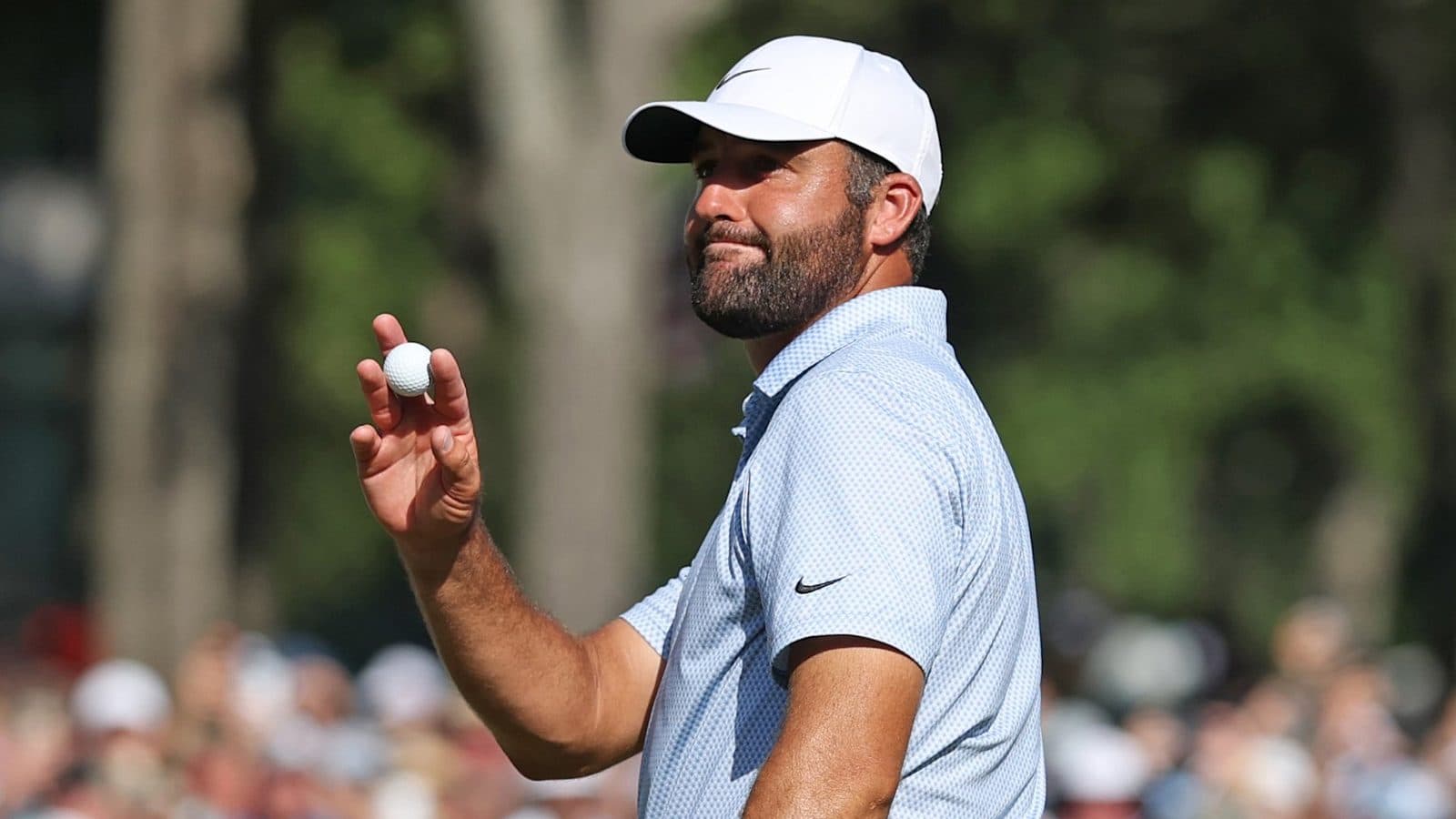
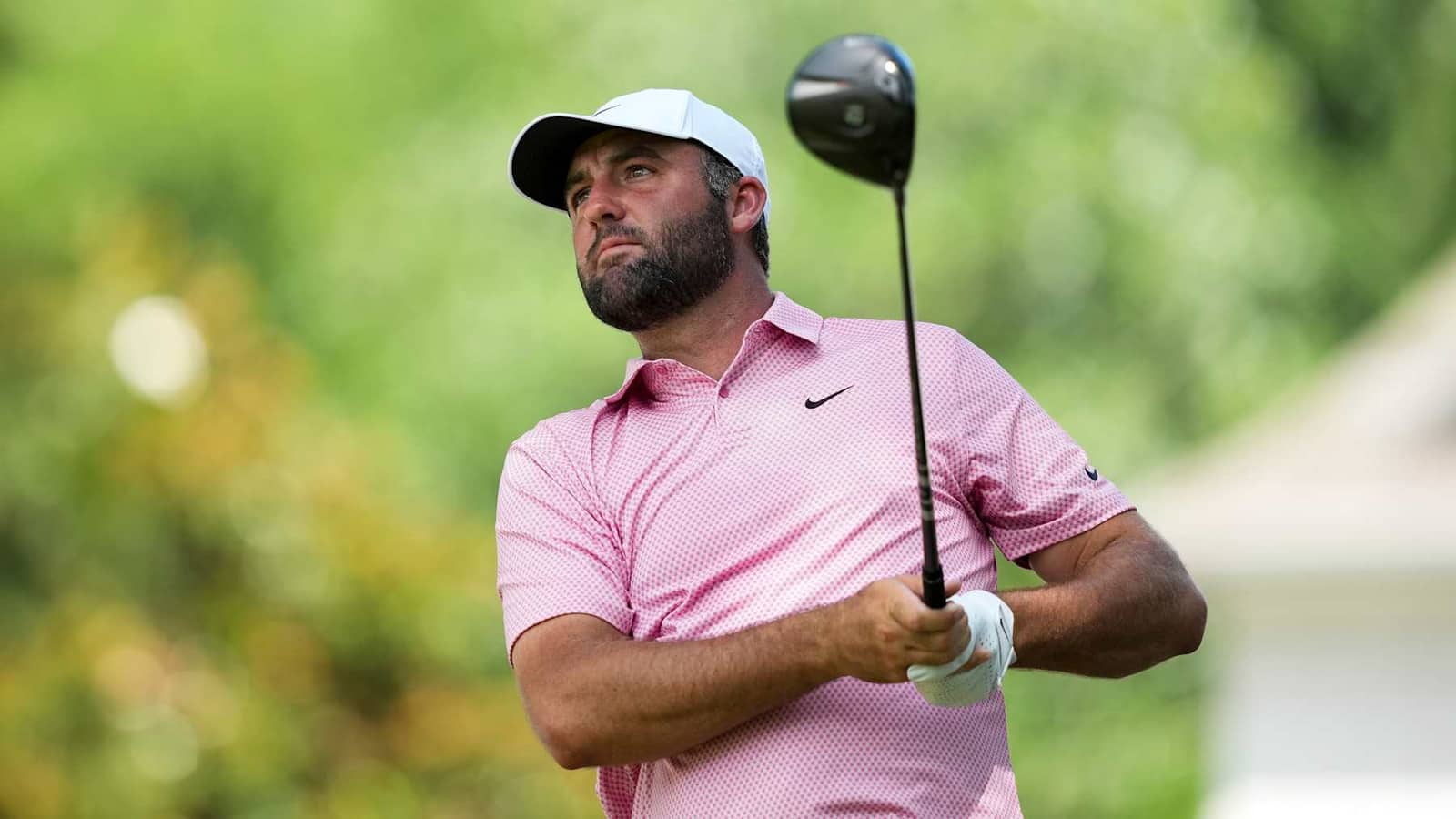
Scottie Scheffler at $13,500 is the anchor. A 101.9 projection and a ceiling of 132.5 — in a 69-player field — is the model saying this guy is in a different category. The B course-fit grade is the only pause, but the projection overrides it. He's the core of a cash lineup, full stop.

Matt Fitzpatrick deserves more attention than his 14.9% ownership suggests. B-plus course fit, 82.9 projected, $9,900 salary. He's the kind of player who doesn't wow you with length but controls his misses, works the short game, and accumulates birdies without catastrophic mistakes — exactly the profile Southwind should reward. Sam Burns at $9,500 with a B fit and only 10.2% projected ownership is the cash-game value that the model quietly likes. His leverage of 8.1 is the highest in the top-projected group, meaning the model believes he's underpriced relative to where the field is going. In cash, that's free equity.

Justin Thomas at $8,100 is the kind of salary relief that lets you get to both Scheffler and someone interesting in the value tier. B-plus fit, 82.0 projected, reasonable ownership. He's been in this conversation before at Southwind and the model respects the résumé.

04 · GPP & LEVERAGE

GPP construction at a 69-player event is a specific kind of puzzle. The field is small enough that chalk concentration is acute — which means the players at sub-2% ownership can genuinely swing a contest if they connect. The leverage scores in this group are staggering by any normal standard.

Highest leverage (model)
PlayerSalaryProjOwnLevFit
Pierceson Coody$6.0K66.40.6%110.6xC
Patrick Rodgers$6.0K64.00.6%106.7xB
Matti Schmid$6.0K66.50.9%73.9xB-
Aldrich Potgieter$6.1K64.10.9%71.3xC
Matt McCarty$6.1K68.61.3%52.7xB
Sam Stevens$6.1K68.11.3%52.4xB-
Sudarshan Yellamaraju$6.2K67.61.3%52xC
Sepp Straka$6.2K68.71.7%40.4xA

Let's be honest about what you're doing here: you're paying a projection penalty to get lineup differentiation and a massive ownership discount. The names at the top of this board — Pierceson Coody and Patrick Rodgers at 0.6% projected ownership with leverage scores of 110.6 and 106.7 respectively — are genuinely long shots. The model projects them in the mid-60s. Their ceilings (89.5 and 83.0) are real but modest. You're not rostering them because you think they're winning; you're rostering them because if they somehow get into contention, you're the only person in the contest who cares.

Sepp Straka is the most interesting name in this group and appears in both the leverage and value tables, which is unusual. He has the only A course-fit grade in the high-leverage tier, a ceiling of 93.5, and sits at just 1.7% projected ownership. That combination — elite fit, meaningful upside, almost no one else has him — is what you're looking for when you build a GPP tournament lineup. Matt McCarty (B fit, 93.0 ceiling, 1.3% ownership) and Nico Echavarria (B fit, 94.0 ceiling, 2.1% ownership) are the other names with genuine upside in this tier worth considering in one-or-two-slot GPP dart spots.

A word of honest caution: in a small field, a punt who misses badly will torpedo your score faster than in a 156-player event. Size these accordingly.

05 · THE PUNT-LEVERAGE TIER

The best-fit value table is where the model earns its keep in the middle of the salary range. These are players at $6,200–$6,900 who profile as genuine course fits — A grades across the board — and who are priced low enough to unlock higher-end combinations in your lineup.

Best course-fit value (model)
PlayerSalaryProjOwnLevFit
Aaron Rai$6.8K75.75.9%12.8xA
Harris English$6.9K73.76.1%12.1xA
Corey Conners$6.7K73.54.6%16xA
J.T. Poston$6.3K71.83.8%18.9xA
Brian Harman$6.5K71.32.8%25.5xA
Nick Taylor$6.4K69.83.2%21.8xA
Sepp Straka$6.2K68.71.7%40.4xA

Aaron Rai is the headliner at $6,800. A course-fit, 75.7 projected, ceiling of 103.0 — meaning the model sees a scenario where he scores at near-top-tier production. He's at 5.9% ownership, which is high enough that he's not a pure contrarian play but low enough that he's not crushing your leverage. Corey Conners at $6,700 is a similar story: A fit, 73.5 projected, 99.1 ceiling, and only 4.6% ownership. Conners is the kind of ball-striker who fits the precision demands of this course quietly and effectively. Harris English at $6,900 completes the upper value tier — A fit, 73.7 projected, and a local favorite playing in front of a crowd that's known him for years.

Brian Harman at $6,500 with an A fit and only 2.8% projected ownership has a leverage score of 25.5, the second-highest in this group. He's also won a major with his short game doing most of the work — exactly the skill profile this course weights most heavily. If you want one value play that threads the needle between upside, fit, and differentiation, Harman is worth a serious look. J.T. Poston at $6,300 with an A fit and 97.0 ceiling at 3.8% ownership rounds out the names you should have in your player pool before you finalize any lineup this week.

06 · TARGET SCORES

Know what you're building toward before you submit. In a 69-player field where the model projects everyone at a 100% cut probability, the scores compress slightly at the top and the cash line isn't as generous as it might appear.

Target scores — 6-golfer DK roster
Cash line
427
Top 10%
499
Top 1%
556
Perfect lineup
681

Cash at 427 points is the line to clear in 50/50s and double-ups — that's your floor target. Top-10 finishes require 499, which means you need at least one player who significantly outperforms projection or a lineup that fires on every cylinder. The winner's score of 556 and the optimal lineup at 681 give you the ceiling context: this is a week where the optimal is nearly 130 points above the winning score, which tells you there's genuine upside variance in how lineups can differentiate. Build cash lineups to clear 427. Build GPPs knowing 499 gets you into real money and you need a player in that 100+ ceiling range to push toward 556.

07 · THE BETTING CARD

The card is straightforward this week, because one play was good enough to stake, and the model is honest when additional edges don't clear the bar.

THE CARD — 7 UNITS STAKED

Scottie Scheffler — Top 20 | −400 | 7 units

The model has Scheffler finishing inside the top 20 at an 85.6% clip. The book implied it at 76.7% when we got the number. That's a 9-percentage-point edge, which in a top-20 market is significant. Yes, −400 looks like juice. The math still clears our threshold: you're not laying −400 because you love paying juice, you're laying −400 because the book is wrong about the probability by nearly 9 points and the expected value is positive. This is not a feel play. This is the model saying the price is misprinted and staking accordingly.

The full 7-unit stake reflects the confidence level and the edge size — not emotion, not the name on the leaderboard. If Scheffler misses the top 20, we say so plainly, we put it in the loss column, and we move on. That's how this works.

LEANS — TRACKED, NOT STAKED

Two edges surfaced in the placement market that didn't make the card but are tracked on the board:

  • Tommy Fleetwood — Top 20 | −110 | Lean: model at 58.5%, book at 52.8%, 5.6-point edge. The A course-fit and projection support it. The ownership (27.4%) doesn't create a problem in a betting context the way it does in DFS. Didn't clear the card threshold, but worth watching the number.
  • Maverick McNealy — Top 20 | +200 | Lean: model at 39.3%, book at 33.8%, 5.5-point edge. The plus-money price is interesting and the edge is real. Not on the card, but logged.

No outright winner edges cleared the bar this week. That's an honest answer, not an oversight.

08 · THE BOTTOM LINE

Here's the week in a paragraph: Scottie Scheffler is the right answer to almost every question TPC Southwind asks, he's the model's top projection by a significant margin, and the book got his top-20 probability wrong enough that we put 7 units on it. That part is simple.

The DFS game is harder. The chalk is real — Fleetwood, Scheffler, Thomas, and Morikawa all have legitimate cases — but the ownership compression in a 69-player field means you need to find at least one player doing real work under 3% ownership. Sepp Straka with his A course-fit at 1.7% is the name the model keeps returning to. Brian Harman's short game in a short-game-weighted environment at 2.8% ownership is the other one.

Build your cash core around Scheffler and the B-plus fits. Build your GPP lineups knowing that Straka, Harman, and Conners are the differentiators who can make a lineup feel original without being reckless. And if you're in a large-field tournament, one dart from the high-leverage tier — McCarty, Echavarria, maybe Straka again — is the ceiling raiser the model wants you to have.

Good luck in Memphis. Try not to watch the leaderboard every five minutes. It won't help.

Written by Arcline AnalyticsSee today's card →