Arcline Analytics

PICKS FRAMEWORK

Koivun at 31% Owns the Room — Here's How to Beat Him

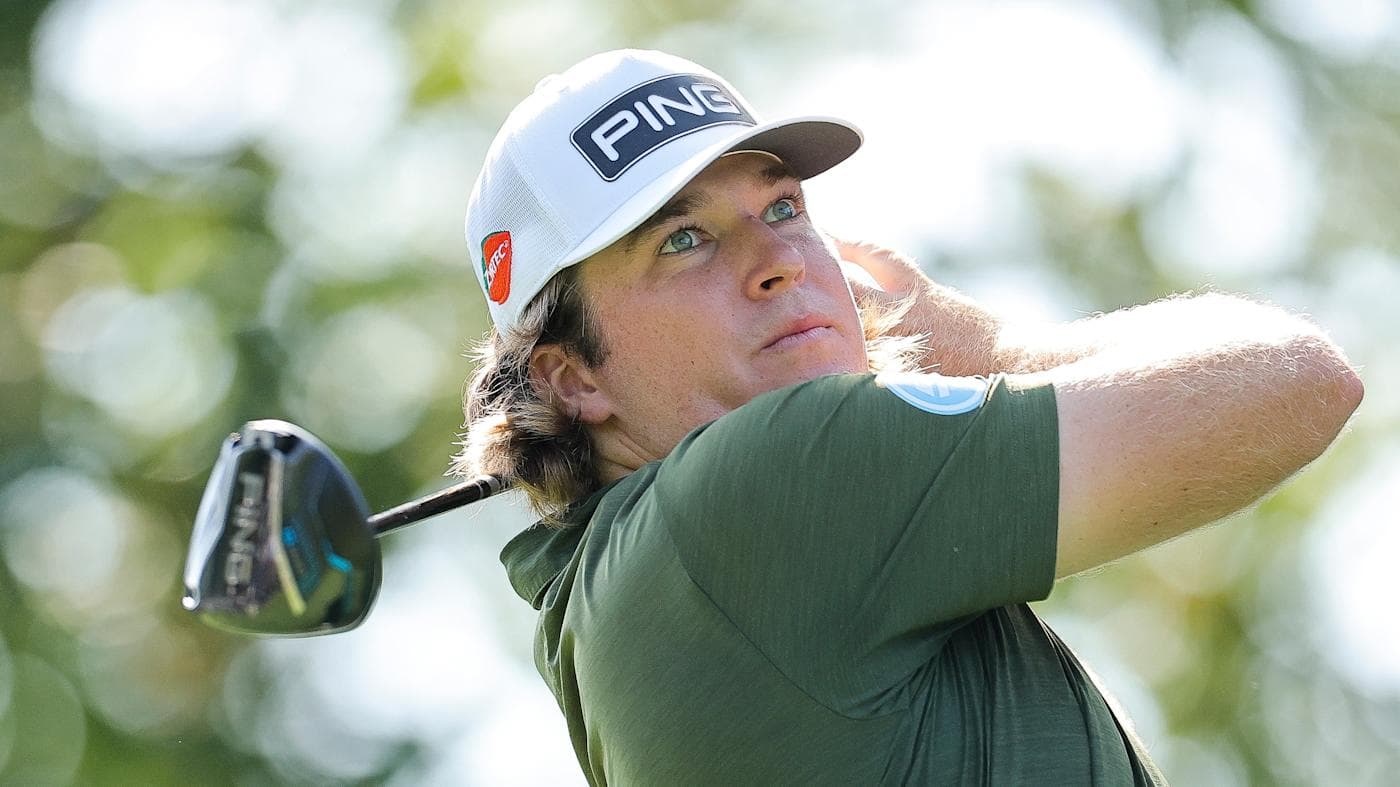
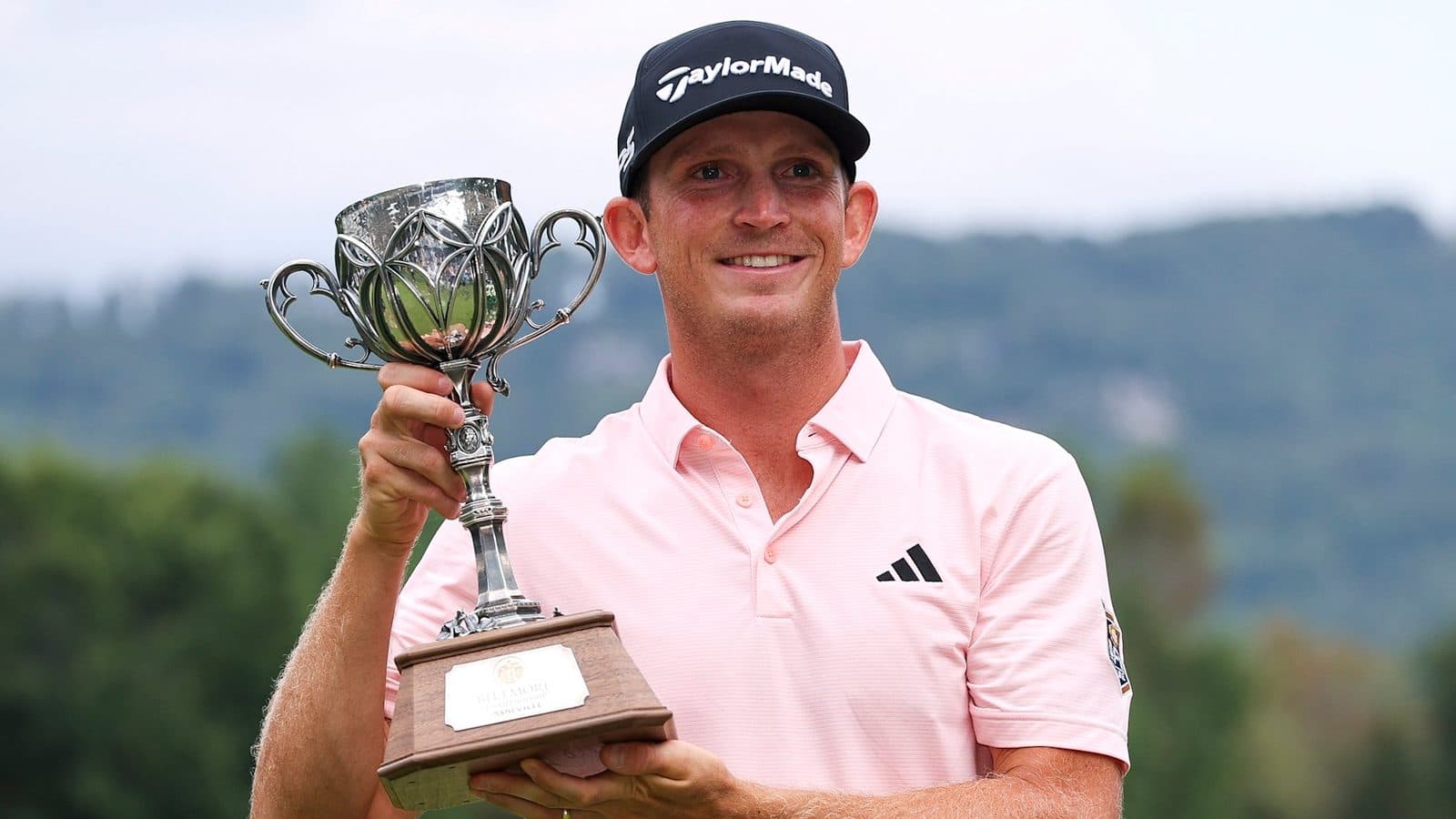
Jackson Koivun is the most projected, most owned player in the field by a wide margin. The model likes him. So does everyone else. That tension shapes every lineup decision this week at The Cliffs at Walnut Cove.

OVERVIEW

The Biltmore Championship Asheville brings a 128-player field to The Cliffs at Walnut Cove — a Korn Ferry event with real separation between the top of the board and the mid-tier, and a course profile the model grades favorably for a concentrated group of fit grades. Every player in this brief carries an A fit, which tells you the course is fairly selective about what it rewards, even if the specific shot values aren't something we'll manufacture here.

The story entering the week is straightforward: Jackson Koivun sits atop the projection board at 79.9 points and is tracking toward 31% ownership. That kind of dual dominance — best number and most popular — is genuinely rare, and it creates the central strategic tension for GPP players. The model thinks he's the best play. The contest field largely agrees. That leaves everyone building around the same question: when is it worth paying for chalk that actually deserves it, and where do you find the five or six other roster spots that give you a chance to win?

The framework below works through that question position by position — cash core first, then the GPP pivots and leverage plays that could differentiate a winning lineup by Sunday evening.
WHAT MATTERS HERE

Without a detailed course profile to draw from, the model's fit grades do the translating. Every player in this brief grades A, which means Walnut Cove is rewarding a consistent set of skills across the field rather than sharply splitting the room. That's useful context: you're not hunting for a weird specialist who thrives on a quirky layout. You're identifying who executes the required skill set most reliably at the right price.

What the data does tell us clearly is that ceiling variance is wide. The gap between a player's projected score and their ceiling ranges from roughly 35 points for the chalk plays up to nearly 40 points for the leverage tier. In a 128-person field, you need ceiling outcomes to cash at the top — projections get you through the cut line; ceiling gets you a check worth talking about.

The cut projection sits between 65 and 83 points depending on player tier. Building lineups that only reach 70 is a path to nothing. The cash line is 417, the top-ten threshold is 495, and winning requires something in the neighborhood of 556. Every lineup decision should be filtered through whether the ceiling stack can reach those numbers, not just whether the floor is safe.

THE OWNERSHIP LANDSCAPE

Six players are projecting into double-digit ownership, and the spread between them is significant enough to matter when you're building lineups.

The chalk — projected ownership (model)
PlayerSalaryProjOwnLevFit
Jackson Koivun$10.5K79.931%2.6xA
Corey Conners$9.4K71.723.5%3.1xA
Marco Penge$8.4K66.222.2%3xA
Jacob Bridgeman$10.3K75.719.3%3.9xA
Mac Meissner$9.0K71.015.7%4.5xA
Jackson Suber$8.2K65.015.3%4.2xA

Koivun at 31% is in a category by himself — nearly 12 points ahead of the next most popular player. Corey Conners at 23.5% and Marco Penge at 22.2% form a secondary chalk cluster, followed by Jacob Bridgeman at 19.3%, Mac Meissner at 15.7%, and Jackson Suber at 15.3%. The leverage scores for all six are below 4.5, meaning a field full of these six players produces lineups that look nearly identical. If Koivun or Conners has a bad week, those lineups are already losing before Friday afternoon.

That's not an argument to fade everyone in this tier — Koivun's 79.9 projection is the highest in the field by more than four points, and fading the best number for the sake of differentiation is its own mistake. The argument is to be deliberate: if you're going heavy chalk, you need genuine separation elsewhere. If you're going chalk-light, you need your leverage plays to actually perform.

CASH PLAYS

For cash games — head-to-head, double-up — the goal shifts from ceiling to floor. You want players whose projected scores are high enough to clear the 417-point cash line with some room, and whose upside doesn't come entirely from one great round.

Top projected — cash core (model)
PlayerSalaryProjOwnLevFit
Jackson Koivun$10.5K79.931%2.6xA
Jacob Bridgeman$10.3K75.719.3%3.9xA
Doug Ghim$10.0K73.113.6%5.4xA
Corey Conners$9.4K71.723.5%3.1xA
Mac Meissner$9.0K71.015.7%4.5xA
Davis Thompson$9.7K70.99.9%7.2xA

Koivun is the anchor. His 79.9 projection and 83-point cut estimate make him the most reliable building block in the pool. In cash, the 31% ownership is irrelevant — you're not trying to differentiate, you're trying to win your matchup. The same logic applies to Bridgeman (75.7 proj, 112 ceil) and Doug Ghim, whose 73.1 projection at $10,000 comes with a leverage score of 5.4 — lower ownership than Koivun or Bridgeman while carrying comparable projection credentials.

Ryo Hisatsune earns his place in the cash conversation from the value tier. At $8,500, his 68.7 projection matches Rasmus Hojgaard's, but Hisatsune comes at $1,300 less on the salary sheet. That savings buys meaningful roster flexibility. His 104.5 ceiling is competitive with anyone in the field at his price range, and 9.7% ownership keeps him off the chalk list without requiring a genuine contrarian leap of faith.

Ricky Castillo at $7,500 is the most efficient salary play in the value tier — 64.3 projected points from the lowest salary among the best-fit names, with 10.2 leverage and a ceiling just over 100. Cash lineups that need to stretch the budget should know his number.

GPP & LEVERAGE

GPP construction is about finding the players whose ceiling outcomes are both large enough and sufficiently uncorrelated with the field to move your lineup into a winning score. The leverage tier here is genuinely interesting — several players with A fit grades are projecting between 61 and 66 points while sitting under 7% ownership.

Highest leverage (model)
PlayerSalaryProjOwnLevFit
Johnny Keefer$8.7K62.84.8%13.1xA
Zach Bauchou$7.5K62.44.8%13xA
Blades Brown$8.8K64.95.4%12xA
Mackenzie Hughes$7.6K61.25.7%10.7xA
Beau Hossler$8.6K65.86.2%10.6xA
Max Greyserman$7.6K61.66%10.3xA
Ricky Castillo$7.5K64.36.3%10.2xA
Rico Hoey$7.7K62.06.2%10xA

Johnny Keefer and Zach Bauchou share the top leverage scores in the pool at 13.1 and 13.0, respectively, both at sub-5% ownership. Keefer's ceiling of 99.5 and Bauchou's 98.5 aren't the highest in this tier, but their combination of low cost, low ownership, and A fit makes them the kind of plays that differentiate a winning GPP lineup from a respectable one. The risk is real — Keefer projects at 62.8 and Bauchou at 62.4, and neither floor is comfortable — but GPP construction isn't about comfort.

Blades Brown is the leverage play with the best ceiling in this tier at 103.0 and a projection of 64.9, sitting at just 5.4% ownership and a leverage score of 12.0. He threads the needle between projection credibility and genuine differentiation better than anyone else in the group.

Beau Hossler at 65.8 projected is actually the highest floor in the leverage tier and carries a 102.5 ceiling, making him a reasonable bridge between the chalk and the punts — useful if you want GPP exposure without going fully off the board. His 6.2% ownership is low enough to matter.

Davis Thompson and Ben James deserve mention as the highest-leverage names from the top-projected tier — both under 11% ownership with projections around 70 points and ceilings at 105 and 103.5. They're not technically in the leverage tier by leverage score, but a 7.2 and 6.4 from players projecting that high is worth noting. Either one paired with a chalky anchor gives you a lineup that looks different without sacrificing much projected floor.

THE PUNT-LEVERAGE TIER

When salary relief matters more than projection confidence, the best-fit value list provides the names to consider. These aren't blind dart throws — every player here carries an A fit grade, meaning the model considers them genuinely suited to what the course is asking.

Michael Kim at $7,800 projects at 65.4 with a 103.1 ceiling and 10% ownership — a mid-range salary play with a ceiling that could win a GPP spot on a good week. Andrew Novak at the same $7,800 carries an identical 65.0 projection and 103.5 ceiling with 10.9% ownership. Neither is a true punt, but both free up enough salary to run a top-heavy build that includes Koivun and Bridgeman while staying functional.

Mackenzie Hughes ($7,600, 61.2 proj, 99.5 ceil) and Max Greyserman ($7,600, 61.6 proj, 101.5 ceil) are the names with the most salary relief in the leverage group. Both sit under 6% ownership and carry ceilings near 100. In a tournament where you need 556 to win and 495 to top ten, a 101.5 ceiling is only useful if the rest of the lineup is stacked. Use these two as salary enablers, not as the reason the lineup works.

Rico Hoey ($7,700, 62.0 proj, 101.5 ceil) and Ben Kohles ($7,700, 61.0 proj, 97.0 ceil) round out this range. Hoey has a modest edge on ceiling; Kohles's 97.0 ceiling is the lowest in the leverage group, which limits his tournament upside compared to the alternatives at the same salary.

TARGET SCORES

These are the thresholds that matter when you're evaluating whether a lineup construction actually gives you a chance.

Target scores — 6-golfer DK roster
Cash line
417
Top 10%
495
Top 1%
556
Perfect lineup
689

The cash line at 417 is achievable from almost any combination of top-projected players who hit their floors — five players averaging 83 gets you there. The top-ten threshold at 495 requires at least two ceiling outcomes alongside solid floors from the rest of the roster. Winning — 556 — likely demands one player going nuclear (think Koivun hitting his 116 ceiling) plus four or five others performing at or near their own ceilings. The optimal lineup in the model reaches 689, which is a theoretical construct, but it tells you the score ceiling of the pool is real.

Build your cash lineup to confidently clear 417. Build your GPP lineup to have a plausible path to 556, not just a projected total that sits in the 470s and hopes. There's a meaningful difference between those two roster-construction goals, and it usually shows up in whether you're willing to leave a safe 63-point projection on the board in favor of a volatile 62-point play with a 103-point ceiling.

THE BETTING CARD

No edge cleared the bar this week. The outright and placement markets didn't produce a number the model was willing to stake, so the card is empty — total staked: 0 units.

That's not a hedge or a modesty play. It means the prices available don't reflect a sufficient gap between what the model estimates and what the market is offering. Forcing a pick into the record when the edge isn't there is the kind of discipline violation that costs you in the long run. The leans aren't tracked this week either — the outright and top-20 edge lists came back empty.

If prices move ahead of the first round, we'll revisit. Until then, the value this week lives in the DFS construction above, not the betting markets.

THE BOTTOM LINE

The Biltmore Championship Asheville comes down to a single, honest question: how much of your GPP equity do you allocate to the player the model clearly rates highest when that player is also the most popular in the field?

Koivun deserves his price. His projection, ceiling, cut estimate, and fit grade all support heavy exposure. The 31% ownership doesn't make him wrong — it makes him expensive in terms of differentiation. In large-field GPPs, a full lineup of chalk names rarely wins. In cash, it's often exactly right.

The framework here is: anchor cash lineups with Koivun, Bridgeman, and Hisatsune; find the two or three leverage names from Brown, Hossler, Keefer, and Bauchou that pair well with your salary structure; and make sure your GPP build has a realistic ceiling path to 556, not just a comfortable projected floor. The betting markets didn't give us anything worth staking this week, so the edge is in the roster work. Do that part well and the scores will follow.

This story reflects the information and prices available at the publication time shown above.

Keep reading

More golf stories
Golf · COURSE PREVIEW

Koivun Is the Chalk, But the Edge Is Elsewhere

Golf · RECAP

Bridgeman Wires It at Walnut Cove — and the Model Saw Him Coming

RECAPBiltmore Championship Asheville — Round 3
Golf · RECAP